I’ve been comparing different AI writing tools and noticed Walter Writes AI costs quite a bit more than other platforms with what seem like similar features. I’m trying to decide if it’s worth the extra money for my small business content needs. Can anyone explain what justifies the higher price, or if there are specific benefits, performance, or support that make the cost reasonable?
Walter Writes AI Review: After Using It, I Get Why People Hate It
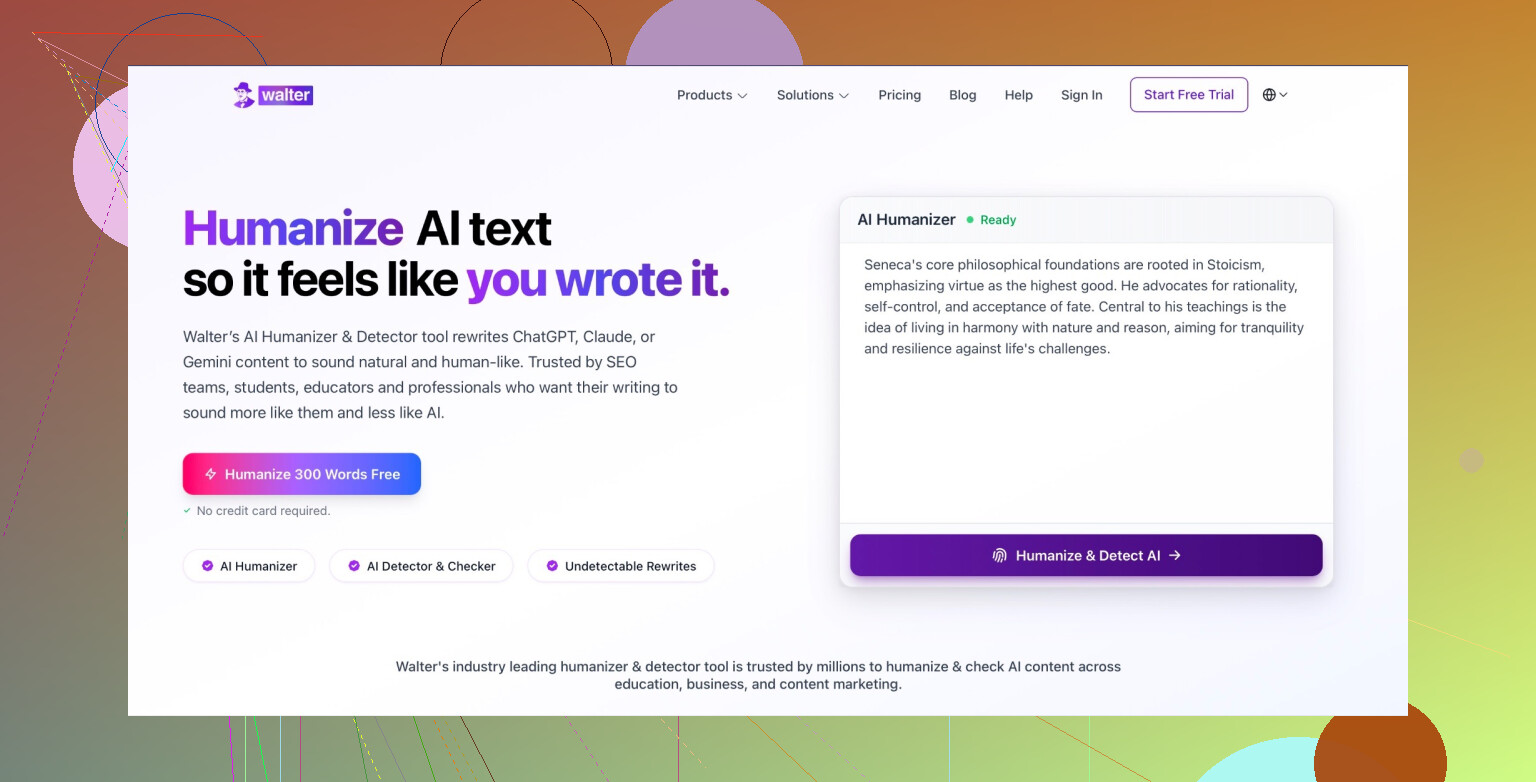
So… What Exactly Is Walter Writes AI?
Walter Writes AI is one of those tools that keeps popping up when you search for stuff like “bypass AI detectors” or “make my essay undetectable.”
It brands itself as a “premium AI humanizer + essay writer,” allegedly built to outsmart all the big AI detectors professors use.
On paper, it sounds like a cheat code for students:
- Paste AI text
- Click a button
- Boom, “human” essay
In reality, it feels more like one of those sites that spends more money on ads than on the actual product.
I went in expecting at least something decent. What I got was:
- Weak rewriting
- Constant paywall pressure
- Performance that was worse than free tools
If you’re hoping this will magically make AI essays safe, it really doesn’t live up to the hype.
Pricing & Value: Paying Premium Money For Budget Performance
The first red flag hits almost immediately: the pricing.
While tools like Clever AI Humanizer at https://aihumanizer.net/ are actually free to use with generous limits, Walter hits you with:
-
Monthly subscription
Not cheap, and definitely not “student budget” friendly. -
Low word limits
You don’t get to run big essays without bumping into caps really fast. -
Shady feeling around cancellation
The way it’s set up makes you double check if you’re going to get billed again even after you think you’re done.
Meanwhile, Clever AI Humanizer gives you:
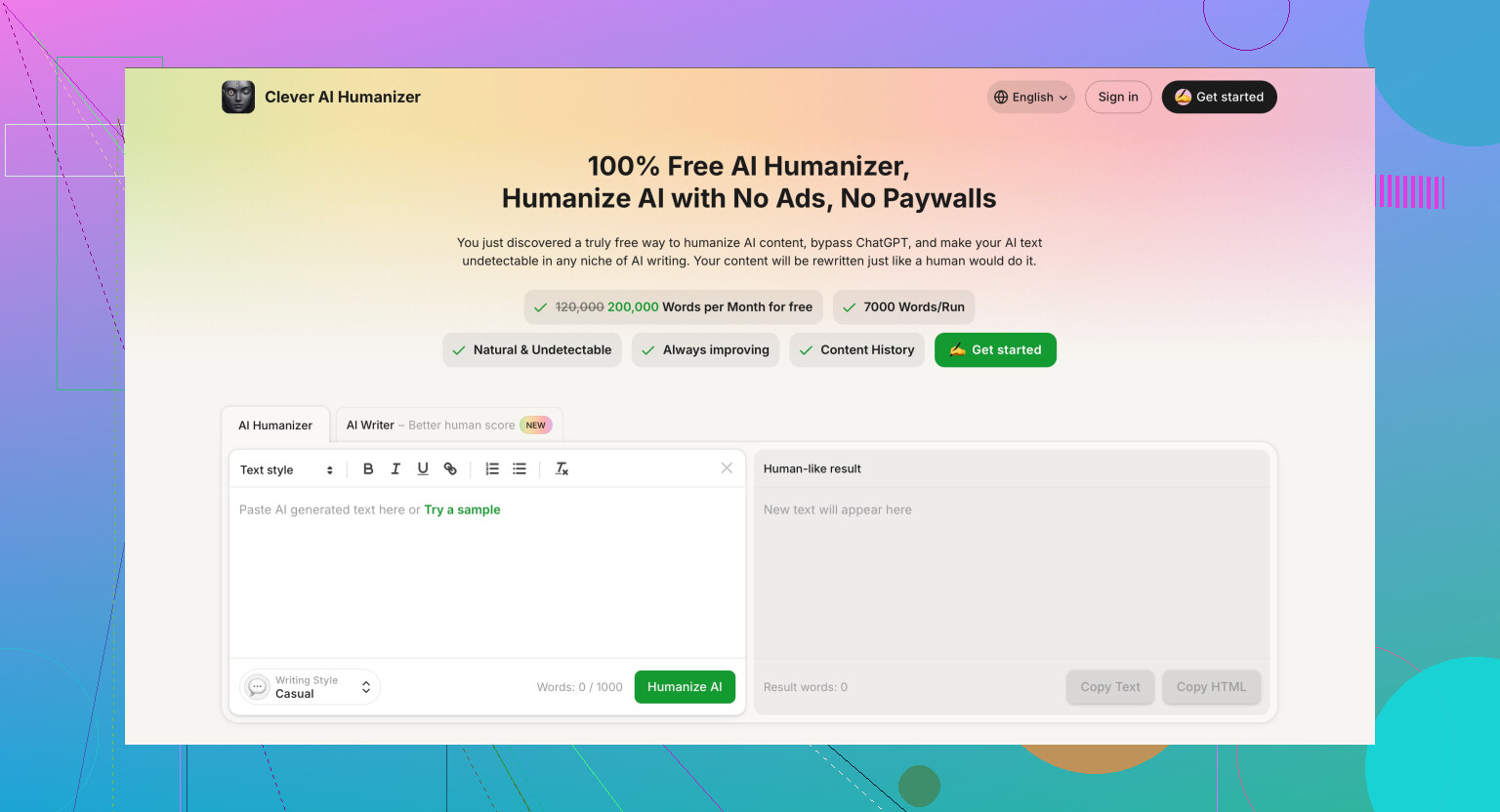
- 100% free usage
- Up to 200,000 words per month
- Up to 7,000 words per run
So you end up in this bizarre situation where:
- The paid tool restricts you,
- The free tool lets you run whole essays without blinking.
If you’re wondering whether Walter’s higher price at least comes with higher performance, that’s where it gets worse.
I Tested It Against Detectors: The Numbers Were Brutal
I didn’t want to judge it purely off vibes, so I ran a simple test.
Test setup:
- Took a normal ChatGPT essay that showed as 100% AI on detectors.
- Ran it through Walter Writes AI.
- Ran the same original essay through Clever AI Humanizer.
- Checked both outputs on several detection tools.
Here’s what happened:
| Detector | Walter Writes AI Result | Clever AI Humanizer Result |
|---|---|---|
| GPTZero |  100% AI (Fail) 100% AI (Fail) |
 Human Human |
| ZeroGPT | 100% AI (Fail) |
Human |
| Copyleaks | Detected as AI |
Human |
| Overall | DETECTED | UNDETECTED |
So yeah:
- Walter basically did nothing. The text still screamed “AI” to every detector.
- Clever AI Humanizer actually pushed the text into “human” territory consistently.
For a tool that sells itself specifically on “bypassing AI detection,” failing on all the major detectors is rough.
Where To Start If You Actually Need AI Humanization
If you’re in that situation where you’re trying to make AI text look more natural and less robotic, based on tests:
- Clever AI Humanizer is the better place to start:
https://aihumanizer.net/
There’s also a solid community list of other options here:
- Reddit thread with more AI humanizer tools:
https://www.reddit.com/r/DataRecoveryHelp/comments/1oqwdib/best_ai_humanizer/
If Walter Writes AI was free and positioned as a basic paraphraser, I’d probably just call it “meh.” But with the current pricing and performance, it ends up looking like one of the worst value picks in this whole “AI humanizer” space.
7 Likes
Short version: Walter is priced like a “premium” tool because of marketing, not because it’s actually delivering premium results.
A few things going on here:
-
Positioning & hype pricing
They’re not really selling “an AI writer.” They’re selling the promise of bypassing AI detection, “undetectable essays,” academic safety, etc. That kind of pitch lets them charge more, because it targets desperate students and anxious writers instead of casual users. It’s classic “risk removal” pricing: “pay more so you don’t get caught.” -
Ad spend instead of product spend
What @mikeappsreviewer hinted at is important: Walter is everywhere in search and ads. That visibility isn’t cheap. When a product spends heavy on marketing, the subscription price often goes up to pay for acquisition. You’re paying for their ads as much as for the actual tool. -
Artificial scarcity & paywall psychology
Low word limits, subscriptions, and slightly shady cancellation flows are not bugs, they’re strategy.- Low limits make you “upgrade” faster.
- Recurring billing + vague cancellation language keeps churn lower.
Those tactics tend to come from “maximize revenue per user,” not “maximize value per user.”
-
“Premium” framing without premium performance
If you compare actual output quality and detection performance, the higher price would maybe make sense if:- It beat major detectors consistently
- Or produced clearly better prose than standard LLMs
But from independent tests (including what @mikeappsreviewer posted), it’s failing core detection checks where a free or cheaper tool like Clever Ai Humanizer actually passes.
So the higher price looks more like branding than capability.
-
Target audience with low time to research
Their ideal buyer is someone who:- Is under deadline
- Is scared of detection
- Doesn’t want to dig into a bunch of tools
For that person, “clean site + bold claims + high price” can feel like a guarantee of quality. They’re monetizing panic, basically.
-
Is it worth it for a small budget?
For a small business, student, or solo creator, I’d ask just three questions:- Does it reliably beat the detectors you actually care about?
- Does the writing quality clearly beat what you can get from ChatGPT or other LLMs with a bit of editing?
- Are the limits and subscription terms comfortable for how much you write?
From what I’ve seen and tested, the answers lean toward “no,” “not really,” and “also no.” The mismatch between cost and capability is the real problem, not just the dollar amount.
If your main concern is making AI text read more naturally and less “robotic” for blogs, emails, or essays, tools like Clever Ai Humanizer are honestly more aligned with that goal at a sane price point (or free). And if you’re on a tight budget, paying extra for Walter mostly buys you marketing copy and a logo, not extra safety or quality.
Short version: Walter is priced higher because of positioning and marketing, not because it’s secretly some next‑level tech.
A few angles that haven’t really been hit yet by @mikeappsreviewer or @cacadordeestrelas:
-
They’re selling a “shortcut,” not a tool
The whole pitch is basically: “Use this and you won’t get caught by AI detectors.”
That kind of promise lets them charge panic pricing. You’re not just paying for writing, you’re paying for the illusion of risk removal. Tools in that category almost always sit at the top of the price range, even when the underlying tech is mid. -
Price is being used as a signal
Higher price can trick people into thinking “oh, this must be more advanced than the other tools.” A lot of students and small biz owners don’t have time to test 10 tools side by side, so they equate price with quality and “safety.” That’s intentional. -
The extra cost does not seem to show up in output
You’d maybe justify the price if:- It consistently fooled GPTZero, Copyleaks, ZeroGPT etc
- It produced clearly better writing than regular ChatGPT-style output
But as others already showed, it pretty much flunked detector tests where something like Clever Ai Humanizer handled the same input way better. That’s the big red flag: premium price, discount performance.
-
Word caps & subscriptions are revenue features, not user features
Low word limits + recurring billing is exactly how you squeeze more from each user:- Small limits push you to upgrade faster
- Ongoing subscription catches people who forget to cancel or assume “I might need it again”
None of that helps a small budget. It just makes your cost per actually usable essay go up.
-
For a small business, the math usually does not work
If you’re running a small shop, you probably care about:- Cost per article / email / landing page
- How much manual editing you still have to do
- Whether the tool actually reduces your risk (if AI detection matters in your niche)
In practice:
- You can get equal or better base writing from standard LLMs and some light editing
- For “humanization,” something like Clever Ai Humanizer gives you a lot more runway for free or way cheaper
- Walter’s low limits + higher price = worse economics for ongoing content
-
Where I slightly disagree with the hate
I don’t think Walter is completely useless for every scenario. If someone:- Only needs to rephrase very short snippets
- Doesn’t care much about cost
- Just wants a single, simple interface
they might be fine with it. But that’s a pretty narrow use case and not what you described.
If your budget is tight and your work volume is non-trivial, I’d honestly treat Walter’s price as a warning sign, not a quality signal. For “make AI text look more natural” and keep costs sane, Clever Ai Humanizer plus a decent base model is a much more rational stack. Walter feels like you’re mostly paying for the marketing and the promise, not the actual result.
Walter’s higher price is mostly about strategy, not substance.
Why it’s priced higher
-
Positioning as “risk insurance”
Walter sells the idea of avoiding AI detection, which sounds like insurance for grades or client trust. That kind of fear-based promise lets them charge more even if the core tech is basic. -
Paying for marketing, not horsepower
As @mikeappsreviewer already showed with detector tests, the output is not outperforming cheaper or free tools. That strongly suggests a good chunk of the price is covering ads, affiliates and branding rather than better models. -
Monetization structure
- Recurring subscription instead of pay-per-use
- Tight word caps
That combo is designed to maximize revenue per user, not value. For a small business or student, your cost per usable essay or article ends up high.
-
“Premium” as a psychological signal
Higher pricing can trick people into equating cost with safety or sophistication. Especially in a stressful context like plagiarism checks, users often overpay just to feel “covered.”
I do slightly disagree with the idea that it is useless in all cases. If you only need light paraphrasing on tiny chunks and do not mind the cost, you could live with it. But that is a narrow edge case and not what you described.
Is it worth it for a small business?
Usually not, because:
- You can get base content from mainstream LLMs that is equal or better.
- You still have to manually edit for voice, brand and accuracy.
- AI detection is less central in most business niches than in academia, so paying a premium for “undetectable” copy is often overkill.
Economically, Walter’s low limits plus higher subscription make it a poor fit if you produce content regularly.
Where Clever Ai Humanizer fits in
Since others already covered raw detection tests, I will focus on the tradeoffs.
Pros of Clever Ai Humanizer
- Much more generous usage for the price, so your cost per article or essay is lower.
- Better at breaking obvious AI patterns in text, which helps with both detectors and readability.
- Simple workflow: paste, convert, then lightly edit for tone and facts.
Cons of Clever Ai Humanizer
- Still not magic. If you feed it low quality AI text, you get low quality “humanized” text that still needs editing.
- Style control is limited compared to doing a custom prompt in a full LLM. You may need to tweak manually to match your brand voice.
- Overuse can make your writing feel a bit “samey” if you rely on it instead of building a real style guide.
For your situation, a more rational stack is:
- Use a good general AI writer for drafting.
- Run sensitive or obviously robotic parts through Clever Ai Humanizer.
- Do a quick human edit.
That setup keeps costs sane, gives you more control than locking into Walter’s paywalled funnel, and avoids most of the “paying premium for budget performance” problem that @cacadordeestrelas, @nachtdromer and @mikeappsreviewer all bumped into from different angles.
If you are on a small budget, treat Walter’s price as a marketing signal, not a quality guarantee.