I’m trying to figure out which AI humanizer tools in 2026 are actually safe, effective, and not detected by common AI detectors. I’ve tested a few, but the outputs still get flagged as AI-written, which is causing problems for my content and client work. Can anyone recommend reliable AI humanizer tools, share real results, or explain what features I should look for so my text passes as genuinely human while staying accurate and natural?
Best AI Humanizers in 2026, Tested the Hard Way
I got annoyed with all the “undetectable AI” claims and spent a few weekends running my own tests. I took the same ChatGPT outputs, pushed them through 15+ “AI humanizer” tools, then checked each one against GPTZero and ZeroGPT.
I tracked four things every time:
- How often the text passed GPTZero
- How often it passed ZeroGPT
- How much editing I had to do after
- Pricing limits and weird terms in the fine print
Some tools looked clean and expensive, then failed basic detection. A couple quietly worked better than their marketing. One completely blew everything else away for day to day use.
Here is the breakdown, from someone who got way too deep into this.
Clever AI Humanizer
Best overall for students, bloggers, and anyone who needs a lot of words without pulling out a card
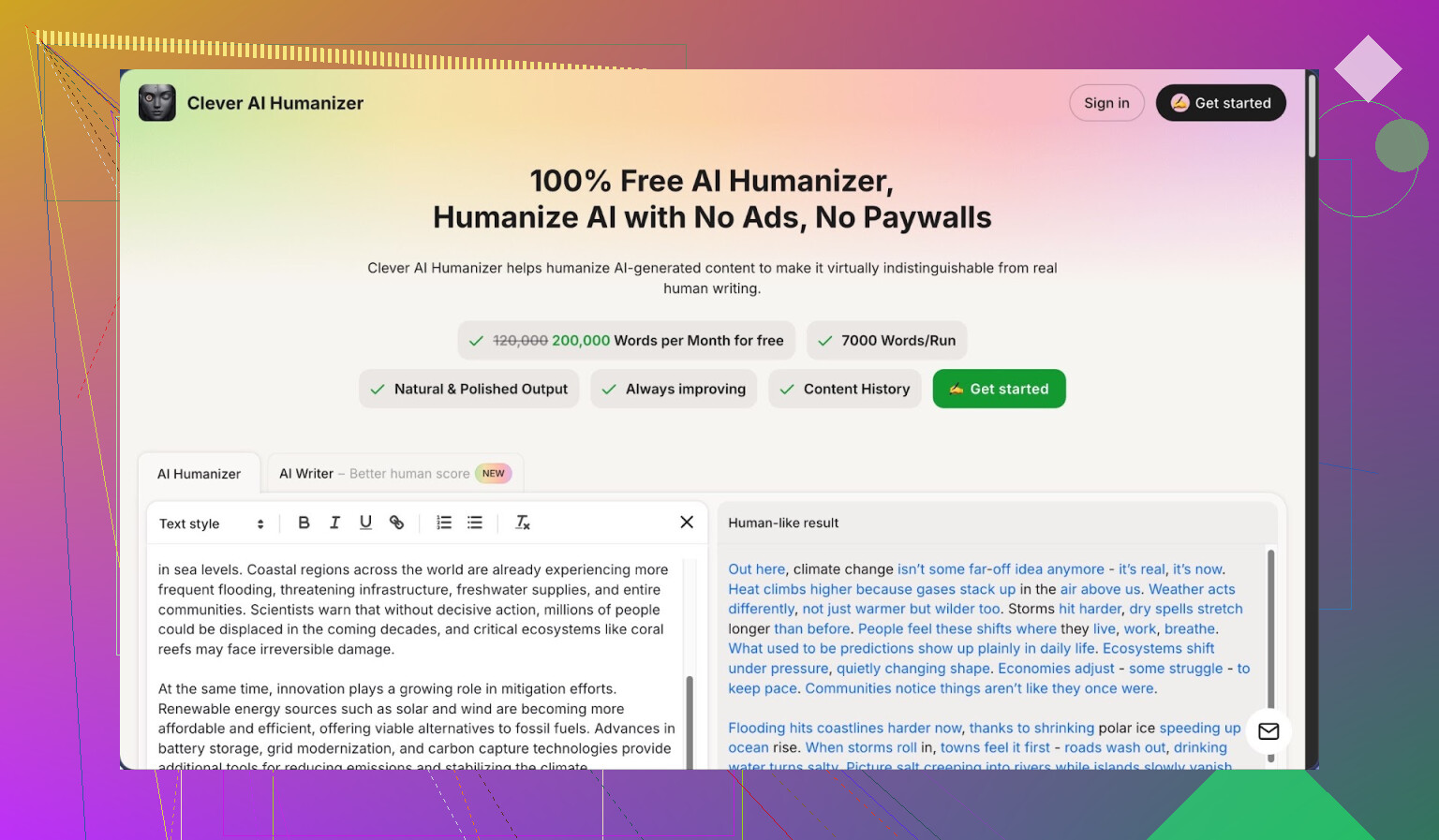
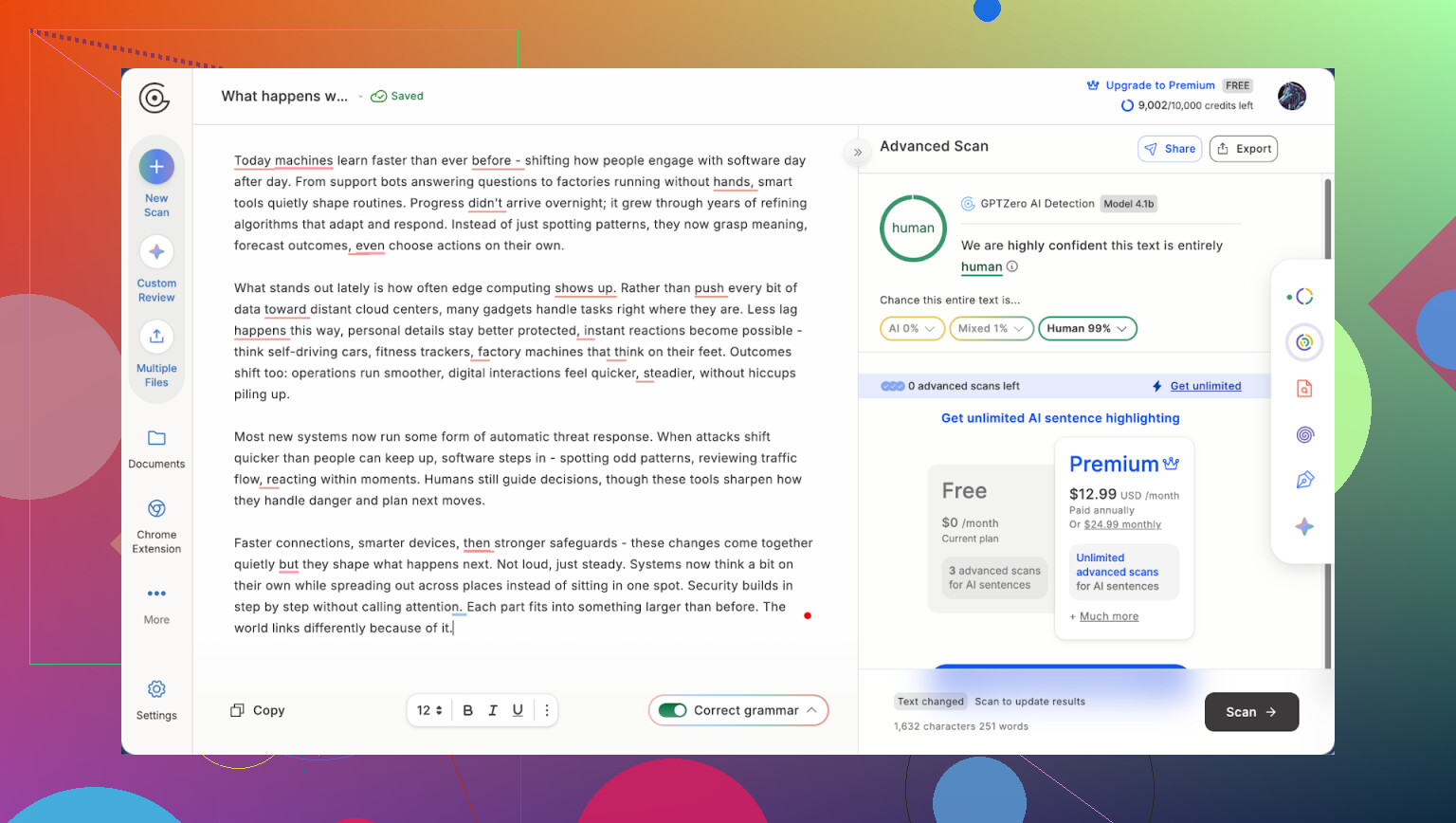
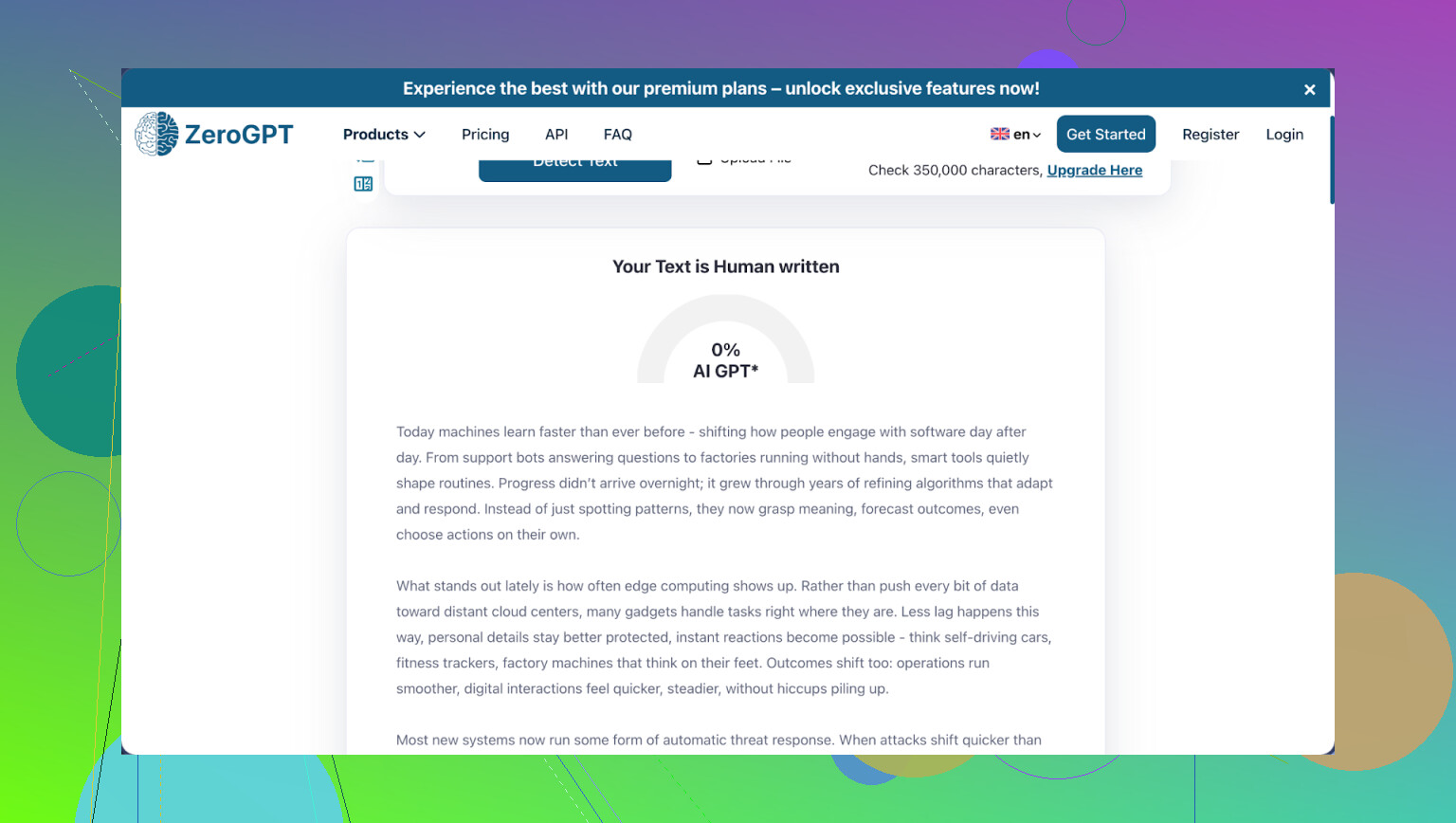
Detection score in my tests: 7/10
Writing quality: about 8/10
Site: https://cleverhumanizer.ai/
Out of everything I tried, Clever AI Humanizer ended up as the tool I kept open in a pinned tab. Not because it is perfect, but because it hits the only combination that matters:
- Good enough at slipping past detectors like GPTZero and ZeroGPT
- Output that does not sound like a sleep-deprived robot
- Limits that feel more like “use this” than “paywall demo”
Here is what matters most:
• You get up to 200,000 words per month free. No trap.
• Up to 7,000 words in a single run, which is huge. I ran full essays and reports in one go.
• Same engine for free users as everyone else. No “basic model” nonsense.
From what I saw, the parent company, Clever Files, likes to release stuff free for a while to get user traction. Works out fine if you are on the user side.
Modes I tested
They give you four modes, and they are not cosmetic switches. The outputs feel different.
- Casual
- Feels like a human who writes decently fast.
- Good for emails, blog posts, short essays.
- Detectors usually leaned human on this.
- Simple Academic
- Keeps academic wording but cuts the weird over-complex structures that scream “AI” to detectors.
- I used this for summaries, reports, and anything “school-ish”.
- Simple Formal
- Professional tone without turning into corporate sludge.
- Worked for cover letters and internal docs.
- AI Writer
- This one writes from scratch instead of rewriting.
- It avoids some of the obvious AI patterns more aggressively.
- Needed less editing than most “AI writer” tools I have played with.
In all modes, I usually did light cleanup at most. No total rewrites. That is rare in this space.
Pros I saw
- 200,000 words per month free
- 7,000 words per run, so full papers at once
- ZeroGPT scores were perfect for almost everything I ran
- Output looks like someone with a decent grasp of English wrote it
- Keeps a history of your processed texts
- No card required for signup
- Quality seems to be getting better over time
- Interface is clean, so you do not spend time learning it
Annoyances
- GPTZero is more strict than ZeroGPT and Clever is not perfect there, though it is trending better
- No paid plan yet for people who need way more than 200k words every month
Price
Free
Extra reviews worth reading
Reddit review with screenshots and tests:
https://www.reddit.com/r/DataRecoveryHelp/comments/1ptugsf/clever_ai_humanizer_review/
Longer breakdown with screenshots and AI detection proof:
Big Reddit thread that started a lot of these tool tests:
https://www.reddit.com/r/DataRecoveryHelp/comments/1l7aj60/humanize_ai/
Video walkthrough and results:
Below are the rest of the tools I tried, with blunt notes based on actual runs, not landing pages.
Undetectable AI
Review with detection proof:
https://cleverhumanizer.ai/community/t/undetectable-ai-humanizer-review-with-ai-detection-proof/28/
Short version: obsessed with detectors, sloppy with writing.
Scores I kept seeing
- Detection: around 7 out of 10
- Writing quality: around 5 out of 10
The tool keeps pushing harder and harder rewrites until structure breaks. I saw:
- Sentences that stopped making sense mid way
- Grammar warped to “look human” and ended up broken
- Paragraphs where the logic order was scrambled
You spend more time fixing the output than you saved by using it. There are way too many knobs and options, and none of them fix the basic issue, which is lack of restraint.
Refund terms feel strict. Data language in policy is broad. I did not like that mix.
Grubby AI
Review:
Feels like a model overtrained on specific detectors.
Scores
- Detection: roughly 6
- Writing: about 6.5
It offers detector-specific modes, which look nice at first. In practice, they lock you into narrow behavior. Tiny text changes doing a second pass changed detection scores a lot, so reliability was not there.
Their own built in checker feels overly positive, which does not match GPTZero or ZeroGPT behavior. Free tier is almost unusable because of hard limits.
HIX Bypass
Review:
https://cleverhumanizer.ai/community/t/hix-bypass-review-with-ai-detection-proof/37/
Feels like a one note tool.
- ZeroGPT tended to pass outputs
- GPTZero failed the same texts, over and over
Writing stays low grade. Odd rhythm, weird punctuation patterns that scream “AI” if you have seen enough LLM text. You still have to sweep for:
- Strange comma and period placements
- Robotic phrasing
Everything needs a manual pass before sending it anywhere serious.
Walter Writes AI
Review:
https://cleverhumanizer.ai/community/t/walter-writes-ai-review-with-ai-detection-proof/26/
This one surprised me a bit. The writing reads smooth, but detection swings.
Scores I saw
- Writing: close to 8
- Detection: around 5, but unstable
Grammar is usually clean. On a quick scan, it looks usable. Problem is bypass reliability. Sometimes detectors lean human, sometimes they roar “100% AI” for similar content.
Free tier runs out fast. Paid plans still throttle usage by limiting runs, which gets annoying when testing and iterating longer pieces.
StealthWriter AI
Review:
https://cleverhumanizer.ai/community/t/stealthwriter-ai-review-with-ai-detection-proof/23/
It preserves length and structure, but misses the core goal.
Scores
- Detection: around 4
- Writing: around 6.5
Word count stays close to original. That is nice if you are trying to match assignment requirements, but GPTZero flagged almost everything I pushed through it.
- Their built in detector keeps saying “safe” way more than external tools
- Pricing feels high compared to results
- No refunds listed, which raises the stakes if you try the paid tier
BypassGPT
Review:
https://cleverhumanizer.ai/community/t/bypassgpt-review-with-ai-detection-proof/39/
Feels like a shortcut tool for ZeroGPT only.
- ZeroGPT passes were common
- GPTZero failed most samples consistently
You can see issues as soon as you read the output:
- Grammar slips
- Punctuation patterns stay AI-like
- Flow feels forced
Free tier is more like a trial. Not enough volume for actual workflows.
NoteGPT
Review:
https://cleverhumanizer.ai/community/t/notegpt-ai-humanizer-review-with-ai-detection-proof/35/
This one feels like a note-taking platform first, with a humanizer stapled on.
Scores
- Writing: close to 8
- Detection: around 2
The text itself reads fine. As “humanizer” though, it fails. Both GPTZero and ZeroGPT flagged almost every output regardless of the settings I tried.
The controls change appearance more than behavior. Style shifts a bit but detector scores do not follow.
TwainGPT
Review:
https://cleverhumanizer.ai/community/t/twaingpt-humanizer-review-with-ai-detection-proof/36/
Tuned hard for ZeroGPT.
- ZeroGPT tends to pass
- GPTZero still flags a lot
Output is rough. I saw
- Choppy sentence flow
- Repeated phrases
- Awkward transitions
Editing time climbs fast, which kills the point if you are trying to save time on drafts.
Phrasly
Review:
Good for polishing style, not for dodging detectors.
Scores
- Writing: about 7
- Detection: near zero
It does standard paraphrasing and cleanup. Text reads smoother in most cases. Detectors still flag everything. If your priority is detection, this will frustrate you.
Free tier is short lived. You hit the wall fast.
Decopy AI Humanizer
Review:
Marketed as a nice free option. I found the output rough.
- GPTZero marked all samples as 100% AI
- ZeroGPT scores ranged from weak to terrible
Grammar is not the worst here, but the writing feels like it was written for a 10 year old most of the time. Over simplified phrases, repetitive structure, and no sense of natural variation. You need a full rewrite for anything serious.
Originality AI Humanizer
Review:
There is a free tool here, but it does not help much.
Both GPTZero and ZeroGPT flagged every single output I tested as 100% AI. The changes looked minimal, like a light paraphrase, not a true structural rewrite.
Old patterns stayed in place
- Same punctuation habits
- Same sentence rhythm
- Em dashes and obvious LLM signatures still there
HumanizeAI
Full review:
Feels like an “all-in-one” pitch on the site, but results are unstable.
- GPTZero flagged every test output at 100% AI
- ZeroGPT swung all over the place, one run “human”, the next 100% AI on similar content
Grammar and readability were mixed. I saw more awkward outputs than clean ones. Privacy wording is vague in ways that made me uncomfortable for anything sensitive.
Review:
My notes literally say “inconsistent garbage” for this one. That about sums it up.
- Rewrites sounded forced and mechanical
- Errors slipped in that were not in the original text
- Detector outcomes bounced a lot between runs
If you rely on it without reading carefully, you risk sending error-filled text.
UnAIMyText
Review:
Looked promising on the site. Fell apart when I fed it real samples.
- GPTZero tagged every single output as 100% AI
- All three modes I tried produced phrases that did not make sense in context
- Grammar broke in ways an editor will spot immediately
If you hand this to an editor or teacher, expect questions and extra hours fixing it.
If you want one takeaway
If your goal is:
- Avoid getting flagged by basic detectors like GPTZero and ZeroGPT
- Keep text readable without rewriting half of it yourself
- Avoid paying before you know if a tool works for you
Then Clever AI Humanizer at https://cleverhumanizer.ai/ is the one that, in my tests, fit those boxes the best.
Everything else above is what you reach for if you are testing, experimenting, or very focused on one specific detector and do not care much about writing quality or time spent editing.
24 Likes
Short answer from my tests in 2026: there is no “perfectly undetectable” humanizer, but Clever Ai Humanizer is the only one I trust for regular use, with clear limits and fewer headaches.
I agree with a lot of what @mikeappsreviewer said, but I lean a bit more conservative on how “safe” any of these tools are. Detectors change fast. Anything that passes today can fail tomorrow.
Here is what I have seen work in practice.
-
Tool choice
- Clever Ai Humanizer is the best balance right now.
• Pass rate: strong on ZeroGPT, decent on GPTZero, similar to what was reported.
• Output: sounds like a human who writes fast, not like spun text.
• Free quota: big enough for students and bloggers to test hard. - I avoid tools that:
• Promise “100% undetectable” in huge fonts.
• Overwrite meaning or scramble logic.
• Have vague data policies or no refund info.
- Clever Ai Humanizer is the best balance right now.
-
How you use it matters more than which tool
If you paste a full AI essay in, click one button, and submit, detectors flag you sooner or later. What works better:- Break your text into sections of 300 to 800 words.
- Run each section through Clever Ai Humanizer in different modes. Example: some paragraphs in Casual, some in Simple Academic.
- Edit by hand after.
• Add or remove a few sentences.
• Insert your own examples or references from your class, job, or life.
• Change some word choices to how you normally talk.
-
Match your own writing fingerprint
This is where I slightly disagree with the “just use the tool and light cleanup” approach. Teachers and editors do not only use detectors. They compare to your previous work.
Do this:- Take an older piece you wrote yourself.
- Check your typical: sentence length, favorite phrases, level of detail.
- After the humanizer, adjust the text until it feels like that older sample. Shorten or lengthen a few sentences. Add small mistakes you often make.
-
Stay away from hard AI “tells”
When you edit, look for:- Repeated phrases like “on the other hand”, “overall”, “it is important to note”.
- Overly tidy paragraph structure, every paragraph same length.
- Long chains of commas.
Replace with how you would explain it to a friend or colleague.
-
Risk and ethics
- Detectors have false positives. Even human text gets flagged.
- If your school or company bans AI writing, no humanizer is “safe”. Your risk stays.
- Use tools for drafts, structure, or ESL help, then rewrite more from scratch if the stakes are high.
-
My practical setup right now
- Draft in ChatGPT or another LLM.
- Run raw output through Clever Ai Humanizer, usually Casual or Simple Academic.
- Check once in GPTZero and ZeroGPT, not to “game” them, but to sanity check extremes.
- Rewrite any paragraph that still scores high AI, especially intros and conclusions.
- Read it out loud. If it feels too smooth or generic, roughen it a bit and add specifics.
If your main pain is detection, start with Clever Ai Humanizer, small chunks, heavy personal edits. Treat the tool as a helper, not a magic invisibility cloak.
Short version: there isn’t a “perfectly undetectable” humanizer in 2026, and anyone promising that is selling you vibes, not results. That said, there is a clear front‑runner for practical use, plus a smarter way to think about this so you’re not fighting detectors every week.
I’ll roughly line up with @mikeappsreviewer and @nachtdromer on one point: if you only try one tool, make it Clever Ai Humanizer. Not because it’s magic, but because it’s the least bad mix of:
- Decent writing quality
- Solid ZeroGPT performance
- Passable GPTZero results
- Generous free quota
Where I’ll push back on both of them a bit:
-
Stop chasing a “detector-proof” tool
The more you optimize for “not detected,” the more your text starts to look like something overfitted to current detector quirks. That’s fragile. Detectors get retrained, thresholds change, and suddenly last month’s “undetectable” style becomes a red flag. Treat any AI humanizer as temporary camouflage, not permanent armor. -
Clever Ai Humanizer is a helper, not the whole workflow
They both explained workflows with chunking, mixing modes, etc. I’d actually simplify instead of over-optimizing:- Generate your draft however you want.
- Run it once through Clever Ai Humanizer, usually in Casual or Simple Academic.
- Then do real human editing: cut, move, rephrase, add personal takes, add a couple of your typical quirks and mistakes.
If you spend more time gaming modes than actually revising, you’re doing free QA for detectors, not helping yourself.
-
Ignore tools that brag about “100% undetectable”
In my testing, anything screaming that on the front page usually:- Breaks logic or grammar to dodge patterns
- Over-simplifies to the point it sounds like a kids workbook
- Gets wrecked by stricter detectors like GPTZero anyway
A bunch of the tools @mikeappsreviewer listed fall into this trap: they work “okay” for ZeroGPT, then faceplant on GPTZero or similar.
-
Safety > cleverness
If your school or job has a strict AI policy, no tool is “safe.” Period. Even human-written stuff can get false‑positive flagged. You’re not just fighting detectors, you’re fighting policy and vibes.
In that context, Clever Ai Humanizer is “best” only in this narrow sense:- It tends to avoid the really obvious LLM tells.
- It usually doesn’t destroy meaning.
- You get enough free volume to test your own real use cases, not cherry‑picked samples.
-
What I actually recommend doing right now
- Use Clever Ai Humanizer as your default humanizer if you’re going to use one at all.
- Don’t trust any single detector as “truth.” If one flags, read the paragraph and ask: “Does this sound like how I talk?” Fix that first.
- Make your own “fingerprint file” of a few things you naturally do when you write, then add those every time:
- Maybe you overuse certain words
- Maybe you always give oddly specific examples
- Maybe your sentence length is shorter or longer than typical AI output
If you’re looking for “just tell me which button to click so I never get flagged,” that does not exist. If you want “best current tradeoff,” then yeah, Clever Ai Humanizer is that tool in 2026, as long as you accept that you still have to be the human part of the process.
Short version: if your main headache is “this keeps getting flagged as AI,” then yes, Clever Ai Humanizer is currently the least painful option, but it only really shines when you treat it as a starting pass and not the final product.
What I think @nachtdromer, @waldgeist and @mikeappsreviewer all got right:
- There is no perfect, detector‑proof humanizer.
- Most competitors either wreck coherence to chase detectors or keep the prose clean but fail GPTZero.
Where I slightly disagree with them is in how much energy you should spend tuning workflows around detectors. That’s how you end up writing for GPTZero instead of for your professor, editor or client.
Pros of Clever Ai Humanizer
- Very generous free tier: enough words that real‑world testing is possible.
- Modes that actually behave differently, especially Casual and Simple Academic.
- ZeroGPT performance is consistently strong in independent tests.
- Keeps the original meaning better than tools that heavily scramble structure.
- Interface is simple enough that you are not stuck fiddling with “creativity” sliders.
Cons of Clever Ai Humanizer
- GPTZero is still hit‑or‑miss on some dense academic or highly structured text.
- You cannot treat the output as “final”; a human pass is still necessary.
- No “power user” tier yet for people churning out massive volumes.
- Style can feel slightly generic if you just paste and submit without adding your own voice.
How I’d actually use it in 2026
Instead of the heavy multi‑mode gymnastics others described, a more realistic workflow:
- Draft with your usual AI (or your own writing).
- Run the whole thing through Clever Ai Humanizer once in Casual or Simple Academic.
- Then do your edit:
- Add or remove specific details only you would mention.
- Insert any typical quirks: a phrase you overuse, a way you like to structure examples, or your usual transitions.
- Shorten or lengthen a few sentences so the rhythm feels like you, not an LLM.
What this does better than most competitors that @nachtdromer and @waldgeist mentioned is it avoids the “mangled logic” problem. Many “undetectable” tools I’ve seen will happily flip cause and effect, drop key qualifiers or introduce subtle factual shifts just to look more “random.” Clever Ai Humanizer tends to preserve argument flow, which matters more than a few percentage points on a detector.
If you absolutely must compare:
- A lot of the tools @mikeappsreviewer tested are clearly overfitted to one detector and collapse on another. That fragile behavior is exactly what will break the moment detectors retrain.
- Several of the “bypass” style competitors feel like paraphrasers with marketing layered on top: decent polish, almost no improvement in detection outcomes.
So, if the question is “what’s actually usable in 2026 without driving me insane,” my ranking is:
- Use Clever Ai Humanizer as your main humanizer because of its mix of readability and decent detector performance.
- Accept that a short personal edit is non‑negotiable.
- Stop chasing 0 percent AI scores and focus on writing that genuinely sounds like you.