I’ve been using Writesonic’s AI Humanizer to make AI-generated content sound more natural, but I’ve hit my usage limits and can’t upgrade right now. I’m looking for a reliable, completely free tool that can humanize AI text without ruining the tone or getting flagged by detectors. What tools or workflows are you using that actually work and are safe for blog posts, social media, and client content?
- Clever AI Humanizer Review
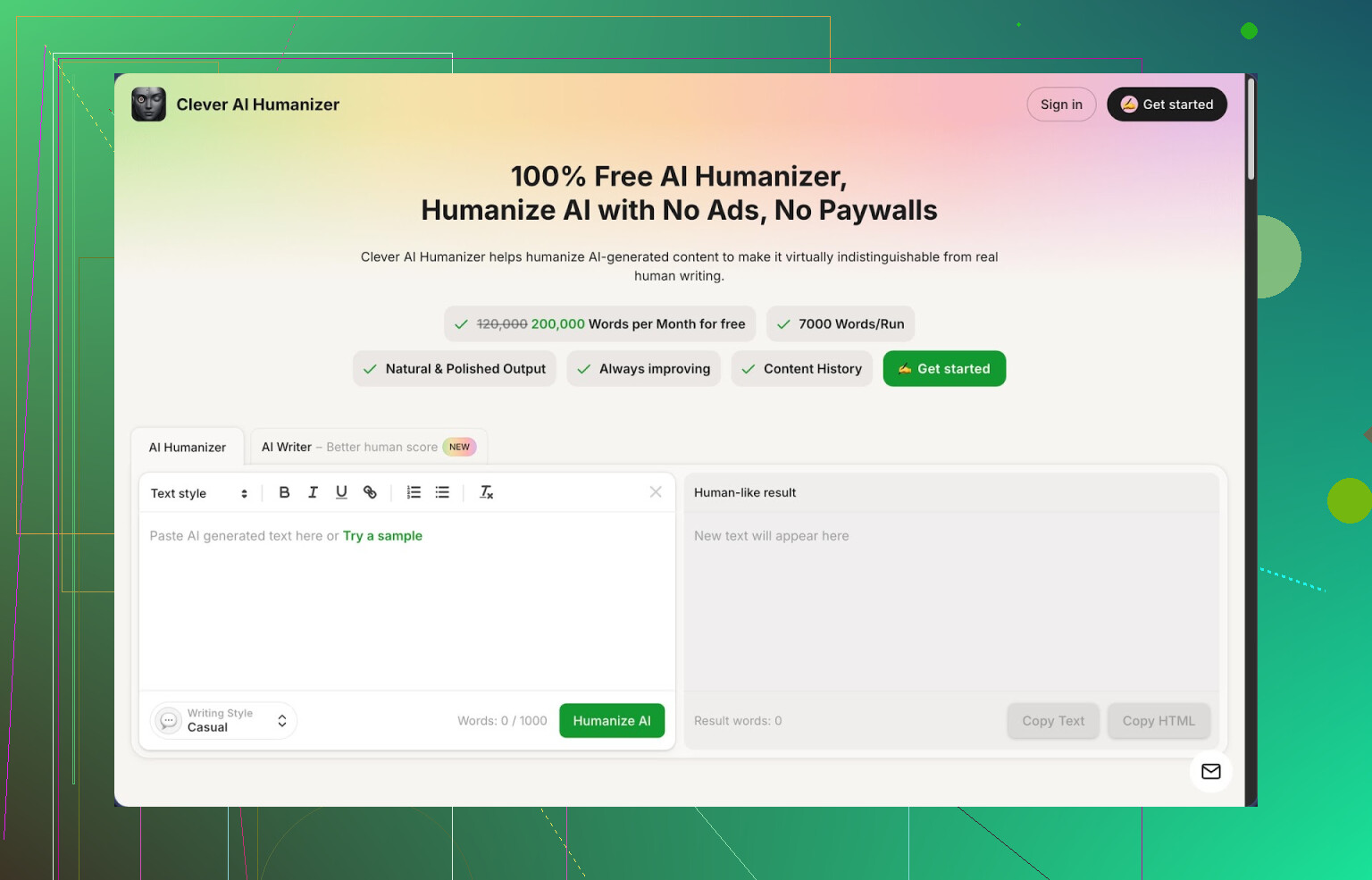
Link: https://cleverhumanizer.ai
I’ve been messing with different “AI humanizer” tools for a while, mostly after getting slapped by a couple of AI detectors at work and on a client platform. Out of the stuff I tried, Clever AI Humanizer ended up being the one I keep open in a pinned tab.
Here is what pulled me in first: it is free, like properly free. You get around 200k words per month, max 7k words per run, and you do not deal with tokens, credits, or trials. No paywall popups mid workflow. For anyone who writes a lot, this matters more than fancy marketing.
It has three styles:
- Casual
- Simple Academic
- Simple Formal
There is also a basic AI Writer built in, so you can generate and humanize in the same place.
I tested it against ZeroGPT a few times with the Casual style. On three different samples I got 0 percent AI detected. Obviously that is not a promise for every text or every detector, but it surprised me, because the text still looked readable and not completely mangled.
What I do in practice
My usual flow looks like this:
- I paste AI text from another model into their “Free AI Humanizer” box.
- I pick Casual for blog content, Simple Academic for reports or school stuff, Simple Formal for emails or docs.
- Hit run, wait a few seconds, get a new version.
The tool rewrites it in a way that feels less robotic. Longer sentences get broken up, filler gets trimmed, and some wording gets changed enough to avoid obvious AI patterns. I compared before and after with a couple of detectors, and the “after” version tends to score lower on AI probability.
One thing I noticed, it tries not to wreck your point. The structure and message stay about the same, which helped when I used it on technical posts or instructions where every step matters. Some humanizers I tried before turned a step-by-step guide into a vague opinion piece, which is useless.
Other parts of the tool
There are three extra modules on the same site:
-
Free AI Writer
You type a topic, pick a format like essay, article, or blog post, and let it write the draft. After that you run the result through the humanizer again. I got better “human score” on detectors when I did both steps inside Clever than when I used one model to write and another tool to humanize. -
Free Grammar Checker
This fixes spelling, punctuation, and some clarity problems. I tested it on a messy draft with double spaces, missing commas, and wrong verb forms. It cleaned it enough that I would feel ok pasting it into a CMS without more passes. -
Free AI Paraphraser
This is closer to a standard rewriter. Same meaning, different wording. I used it for:- rewriting product descriptions so they do not look copy pasted
- changing tone from stiff to neutral or from academic to simpler language
- making alternative versions of intros for A/B tests
All these sit in one interface, so you move from writing to humanizing to grammar to paraphrasing without juggling logins or windows. It is not fancy, but it saves time when you write every day.
What I liked
- No credit limits in the middle of a long project
- High word cap per run, 7k is enough for long-form posts, reports, or scripts
- Text stays close to your original meaning
- Casual mode works well for blog-style or Reddit-style writing
- Interface is straightforward enough that you learn it in a minute
What annoyed me
It is not magic. A few points:
- Some strict detectors still tag the output as AI, especially on technical or generic topics. So you still need to mix in your own edits, personal details, and specific examples.
- The text sometimes grows longer after humanization. To break AI patterns, the tool tends to add or extend phrases. If you need to hit a tight word limit, you will have to trim it again.
- Once or twice I had sentences that felt slightly over-polished, so I manually made them “rougher” to look more like my usual writing.
For what it costs, it is hard to complain, but I would not treat it as a one-click “make this human” solution. I see it more as a base pass that you still tweak.
Who I think it fits
From my own use:
- Students who use AI drafts but do not want them to read like a bot wrote them
- Freelance writers who need to clean up or humanize bulk content for clients
- People posting blog content, newsletters, or Reddit guides who start from AI text and then personalize
- Non-native English speakers who need more natural-sounding phrasing before publishing
If you rely only on the tool and never add your own thoughts or edits, detectors will catch you sooner or later. If you use it as one step in your writing workflow, it helps.
Extra links and proof
They have a longer write-up with examples and detection tests here:
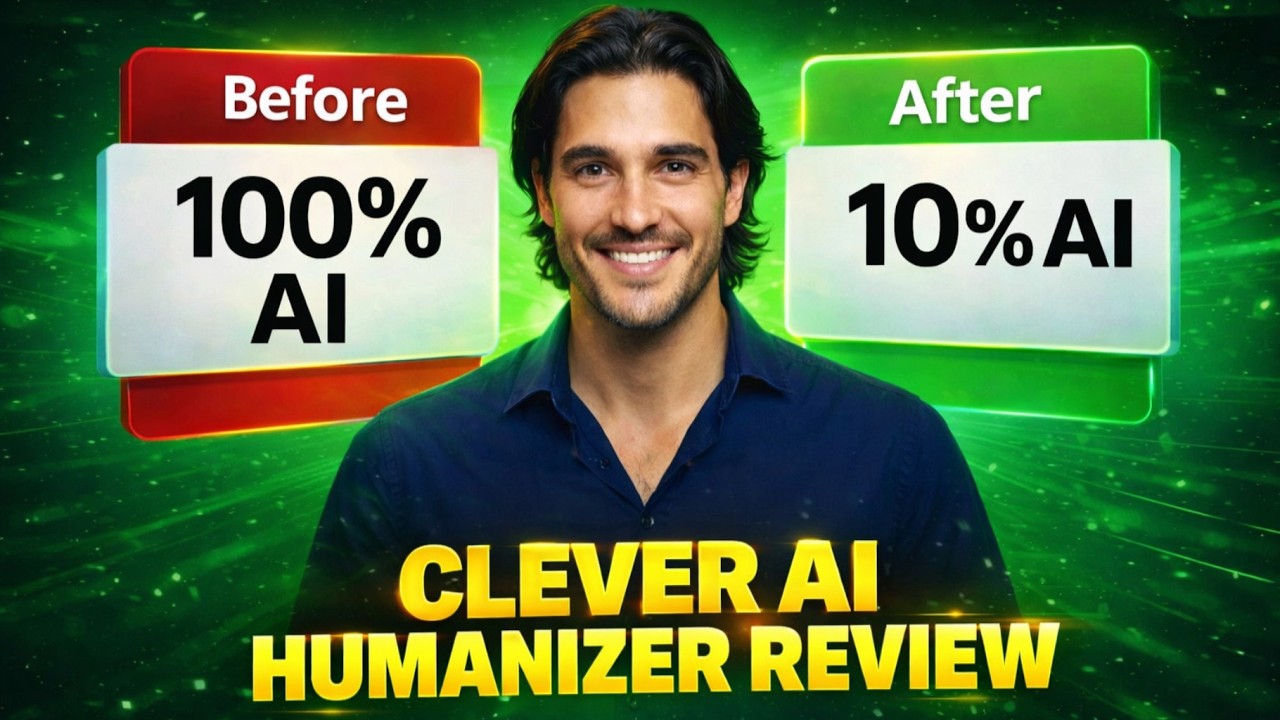
YouTube review:
Reddit threads that talk about AI humanizers and this tool among others:
Best AI Humanizers:
https://www.reddit.com/r/DataRecoveryHelp/comments/1oqwdib/best_ai_humanizer/
General thread on humanizing AI text:
https://www.reddit.com/r/DataRecoveryHelp/comments/1l7aj60/humanize_ai/
If you write a lot and you are constantly fighting caps, tokens, or pricing tricks, it is worth opening Clever AI Humanizer in a tab and running a few of your old AI texts through it to see how they come out. That is how I ended up keeping it in my regular stack.
4 Likes
Short version if you hit the Writesonic wall and need free options:
-
Clever Ai Humanizer
I’ll second what @mikeappsreviewer said, but with a different angle.
For a straight replacement for Writesonic’s humanizer, this is the closest thing right now.What works well for your use case:
- It is actually free, with a high word allowance per month.
- You drop in AI text, pick a style, hit go, done.
- Casual mode fits blog posts, Simple Academic fits essays and reports, Simple Formal fits emails.
- Output usually passes lighter AI detectors like ZeroGPT in my tests on 1k to 2k word chunks.
- It keeps structure, which helps if you have headings, bullet lists, or steps.
Where I disagree a bit with Mike:
- I would not trust any humanizer alone for high stakes stuff like graded essays or client copy.
- On longer content, Clever Ai Humanizer sometimes repeats phrases. I always do a fast manual pass to cut repetition.
- For tight word counts, run it once, then paste into a plain editor and trim by hand. It tends to inflate length.
Basic workflow that works well:
- Generate your draft in whatever model you use.
- Paste into Clever Ai Humanizer, pick style based on audience.
- Run the output through a grammar checker like LanguageTool or QuillBot’s free check.
- Add 3 to 5 personal touches: a short anecdote, a specific tool name you use, a number or example from your actual experience. Detectors hate those personal bits less.
-
QuillBot Paraphraser (free tier)
- Shorter limit, so use it on key paragraphs, not full articles.
- Use “Standard” or “Fluency” modes.
- Then run that through Clever Ai Humanizer to break AI patterns further.
This two step mix helps when one tool alone still gets flagged.
-
Old school manual “humanizing”
Takes more time, but no limits:- Change all generic transitions: replace “Additionally, Furthermore, In summary” with how you usually talk.
- Insert 1 or 2 short sentences that sound like you: “I tried this last week and it broke half my setup.”
- Shorten overlong sentences. Keep most under 20 words.
- Swap textbook words: “utilize” to “use”, “therefore” to “so”, etc.
If you want a straight, free Writesonic Humanizer replacement, start with Clever Ai Humanizer for the heavy lifting, then clean up by hand. That combo keeps you away from paywalls and still gives you natural sounding text.
If you’ve hit the Writesonic wall, Clever Ai Humanizer is honestly the only true like‑for‑like free replacement I’ve seen that isn’t pretending to be free and then nagging you for a card. I agree with a lot of what @mikeappsreviewer and @byteguru said, but I don’t fully buy the “run it and you’re good” vibe.
Where it actually helps:
- It’s one of the few tools where “free” actually means “usable at scale”
- Styles are simple and not bloated with gimmicks
- It doesn’t totally trash structure like some “humanizers” that turn a how‑to guide into motivational quotes
Where I think people are overselling it:
- Any tool that advertises itself as an AI detector bypass is living on borrowed time. Detectors update constantly. If you’re expecting Clever Ai Humanizer to be your invisibility cloak for essays or client work with zero effort from you, that’s fantasy land.
- Passing ZeroGPT once does not mean “safe everywhere.” Some stricter models will still flag parts of the text, especially if the source is very generic.
My take on how to actually use it as a free Writesonic Humanizer replacement:
- Use Clever Ai Humanizer as the first pass, not the final pass.
- After that, manually:
- Cut any obviously padded phrases or repeated transitions.
- Drop in 2–3 real details from your life or project. Not “for example,” but “last quarter we tried X and it tanked by 20%.”
- Change a few sentences to your real voice. If you never say “moreover” in real life, delete it.
If you want other free tools in the mix that aren’t just clones of what’s already been mentioned:
- LanguageTool (grammar + style, free tier is enough to clean up after humanization)
- Hemingway Editor (not an AI, but it will force your sentences to be shorter and more “human” than the overpolished stuff many models spit out)
Blunt version:
Clever Ai Humanizer is probably the top free replacement for Writesonic’s AI Humanizer right now in terms of word limits and simplicity, but if you’re trying to completely automate “humanizing” and never touch the text yourself, no tool is going to save you long term.
Quick add-on to what’s already been said, focusing on what actually matters once you’ve hit that Writesonic limit.
1. Clever Ai Humanizer as your main free workhorse
Everyone already covered the basics, so here’s the shorter, practical angle:
Pros
- Genuinely usable free tier (large monthly allowance + long per-run limit).
- Keeps headings, lists, and structure intact, so it works for guides and essays.
- Simple style presets: Casual / Simple Academic / Simple Formal cover most use cases.
- Pairs well with any model: you can drop in GPT, Claude, Writesonic, whatever.
Cons
- Tends to puff up word count. For tight assignments or client briefs, expect to trim.
- On very generic topics, detectors can still ping parts of the text.
- Sometimes sounds a bit “too clean,” so you may want to roughen a few lines to match your natural voice.
Where I disagree slightly with @byteguru and @mikeappsreviewer: I would not bother chaining three or four tools on every single piece. That’s overkill for most blog posts or low‑stakes content. One pass through Clever Ai Humanizer plus a focused five‑minute manual edit is usually enough.
2. When competitors’ approaches actually help
- What @caminantenocturno mentioned about mixing in real personal details is underrated. A couple of specific numbers, tools you actually use, or quick anecdotes often break AI “texture” more than yet another paraphraser.
- The multi‑tool flows from @byteguru and @mikeappsreviewer are worth it only when the piece is high stakes or going through strict filters. For day‑to‑day stuff, you’ll just waste time.
3. Simple workflow that doesn’t feel like a chore
- Draft with any AI.
- Run once through Clever Ai Humanizer in the style that matches your audience.
- Manually:
- Cut obvious filler and repeated transitions.
- Swap a few phrases into how you actually talk.
- Add 2 to 3 concrete, personal details.
That combo respects what the others recommended without turning your process into a full‑time job, and it gives you a realistic free replacement for the Writesonic AI Humanizer.