Accidentally deleted a bunch of important videos from my computer. Need a reliable video recovery software. Can anyone suggest the best options they’ve used? Need to recover them ASAP for a project.
Oh man, losing a bunch of important videos is a nightmare. But don’t panic yet! You’ve got a few solid options that should help you recover those files in no time. Here are some tops picks:
-
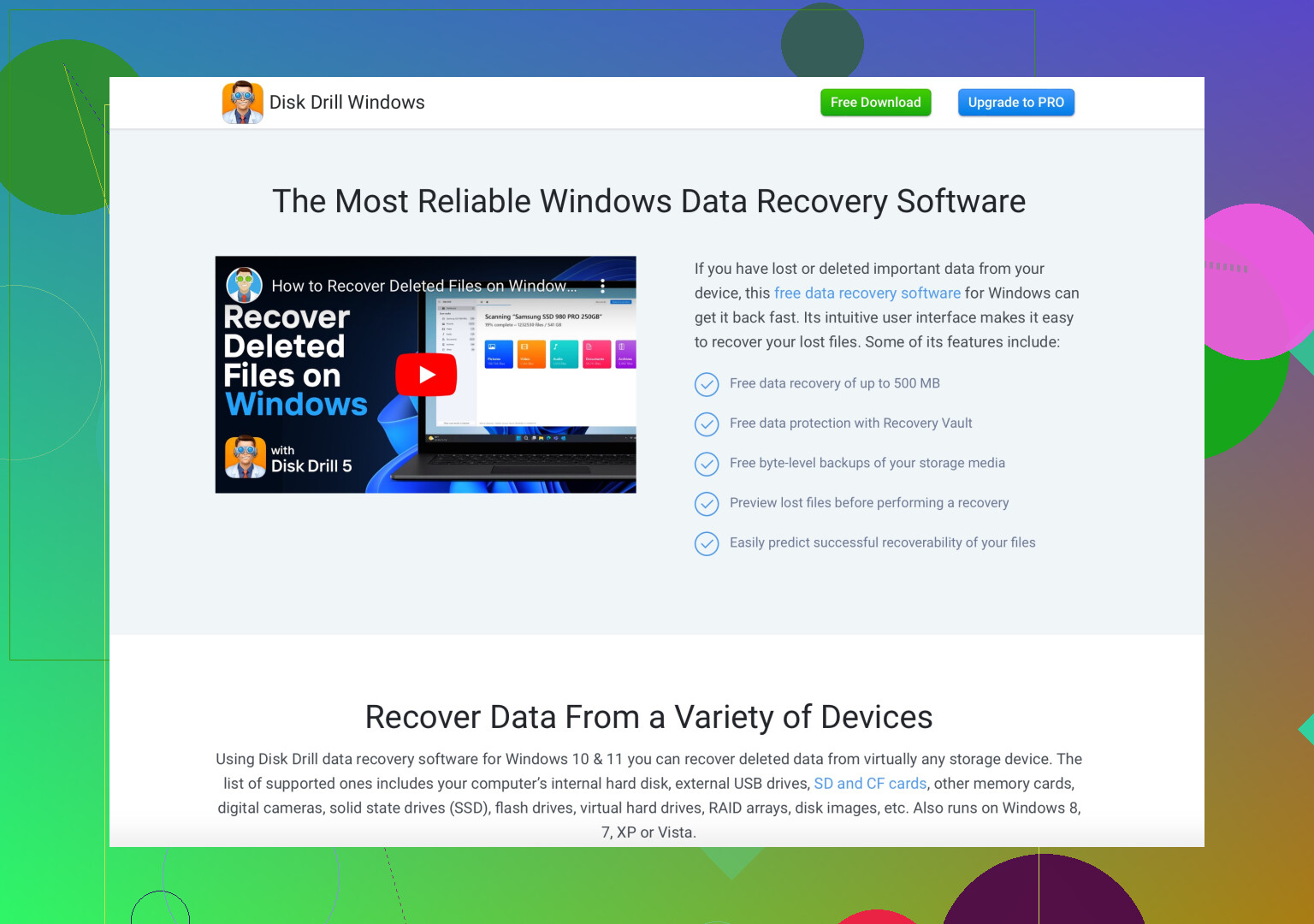
Disk Drill – This software is a heavy hitter in the data recovery world. It’s really user-friendly and can recover almost any file type, videos included. Plus, it supports both Windows and macOS. Check it out here.
-
Recuva – From the makers of CCleaner, this one’s pretty straightforward. It has both a free and a paid version, and it’s good for recovering various types of files. The interface might look a bit old-school, but it gets the job done.
-
Stellar Data Recovery – This one’s quite reliable. It offers a clean interface and a deep scan option that might take a while but can be worth it for recovering those hard-to-find files.
-
EaseUS Data Recovery Wizard – Another strong contender. The free version lets you recover up to 2GB of data, which might be enough depending on your needs.
-
Wondershare Recoverit – Offers a free option for up to 100MB of recovery. The interface is slick and it even allows previewing files before recovering.
So, my top pick? Definitely give Disk Drill a try. I’ve had real success with it in the past. And it’s known for being effective and fast. Good luck with your recovery!
30 Likes
You might be pulling your hair out over losing those videos, but fear not, digital warriors! Here are some alternatives you haven’t considered:
-
R-Studio - This software is for the technically inclined. It handles complex data recovery scenarios and even RAID reconstructions. While its interface isn’t the sleekest, it’s powerful.
-
PhotoRec - Despite its name, it recovers more than just photos. It’s open-source and works cross-platform, but it’s command-line based, which might be daunting if you’re not familiar.
-
GetDataBack - This software has a straightforward interface and is especially handy if you’re dealing with NTFS or FAT file systems. It’s very intuitive.
-
MiniTool Power Data Recovery - Offers a personal and business plan with advanced recovery features. It supports a variety of systems and devices, which can be a lifesaver.
-
TestDisk - This one’s another open-source gem. Not only does it recover lost partitions, but it also rebuilds boot sectors – pretty hardcore but incredibly useful.
That being said, if you want something really user-friendly and effective straight out of the box, try Disk Drill. It’s simply the smoothest ride for most users. The interface is intuitive, and it handles a wide range of file types and scenarios.
In the end, your best bet will depend on how tech-savvy you are and what exactly you need from your recovery software. If you’ve got the know-how, trying R-Studio or TestDisk might be rewarding. Otherwise, stick to something more user-friendly like Disk Drill or MiniTool.
Fingers crossed for a speedy recovery, and keep those backups updated next time! 
Hey, no time to waste! Let me jump straight into some other options that weren’t covered yet:
1. Data Rescue 5 – It’s specifically designed for lost or corrupted videos. The interface is user-friendly, but it’s a bit on the pricey side. Pros: High success rate, Cons: Expensive.
2. Prosoft Data Rescue – This is another powerful tool that works on both Windows and macOS. It’s particularly good for media files but is more costly.
3. Acronis Revive – Solid for video recovery, especially on older hard drives. It tends to be user-friendly but might not be as fast as others.
One big plus for Disk Drill, mentioned by @suenodelbosque and @sternenwanderer, is its simplicity and effectiveness in different scenarios. Pros: Cross-platform, handles various file types, intuitive UI. Cons: The free version has limitations, and full recovery requires a paid upgrade.
For a quick comparison:
- Disk Drill is stellar for ease of use and versatility.
- Prosoft Data Rescue is fantastic but pricey.
- Acronis Revive is user-friendly but may lag a bit.
Think about what features matter most to you. Do you need quick previews? A super intuitive interface? Or maybe you’re okay with diving into more complex tools for better results?
Whichever route you go, make sure you act quickly—deleted files are more likely to be overwritten the longer you wait. Best of luck!
Before buying software, stop using the drive. Check Recycle Bin or Trash first. Then check OneDrive, Google Drive, iCloud, Windows File History, or Time Machine. Cloud trash often keeps deleted videos for 30 days. Restore files to a seperate drive.
If no backup exists, remove the drive and connect it to another computer as a secondary drive. For irreplaceable files, ask a local data recovery shop for a free diagnosis. This route is simpler and safer, espescially if the drive clicks, freezes, or disappears.
Recovered video files play back broken more often than people expect. That’s the part missing from all the tool talk above. Videos are big and get scattered across the drive in fragments, so a recovery scan can happily report a ‘found’ file that turns out to be half green blocks or won’t open at all. The scan success rate and the actual usable-footage rate are two different numbers, and no tool listed here tells you which one it’s quoting.
So before you pay for anything, run the free scan and use the preview. That’s genuinely the useful bit @sternenwanderer and @viajantedoceu touched on with Disk Drill. If the preview plays, good sign. If it stalls or shows garbage, spending money won’t fix it, because the data underneath is already partly overwritten. Treat the preview as your real test, not the file count.
I’d also back @megafox harder than the rest of the thread does. The cloud trash check is the highest-return move here and it takes two minutes. If these videos ever touched Google Drive, OneDrive, or Photos, the deleted items folder likely still has them for a few weeks, fully intact, no fragmentation gamble. People skip straight to recovery software and forget the copy that’s already sitting online.
One thing nobody flagged: if you deleted them from the same drive your operating system runs on, every minute you keep using that computer lowers your odds. Browsing this forum, installing recovery tools, all of it writes to the disk. Download the recovery app to a USB stick or a second drive and recover onto that second drive too, never back onto the source.
Honestly, if the footage is truly irreplaceable and the previews look bad, stop and get a shop diagnosis instead of burning attempts on it. Consumer tools are fine for a straightforward accidental delete on a healthy drive. They’re the wrong bet once the file’s already partly gone.