I’ve been testing NoteGPT’s AI Humanizer to rewrite AI-generated content so it passes as more natural and human-like, but I’m not sure if it’s actually effective or safe for SEO and authenticity. Can anyone share their real-world results, pros and cons, and whether it’s worth relying on for blogs or client work?
NoteGPT AI Humanizer review, from someone who tried to break it on purpose
Short version
I went into NoteGPT because I liked the idea. One place where I could summarize YouTube, break down PDFs, and keep notes, and on top of that, an “AI humanizer” with a bunch of knobs to turn.
What I hit instead was this: every single “humanized” output I tested showed up as 100% AI on both GPTZero and ZeroGPT. No exceptions. No small win. Nothing.
Here is the original review link they use in their own ecosystem if you want extra context:
https://cleverhumanizer.ai/community/t/notegpt-ai-humanizer-review-with-ai-detection-proof/35
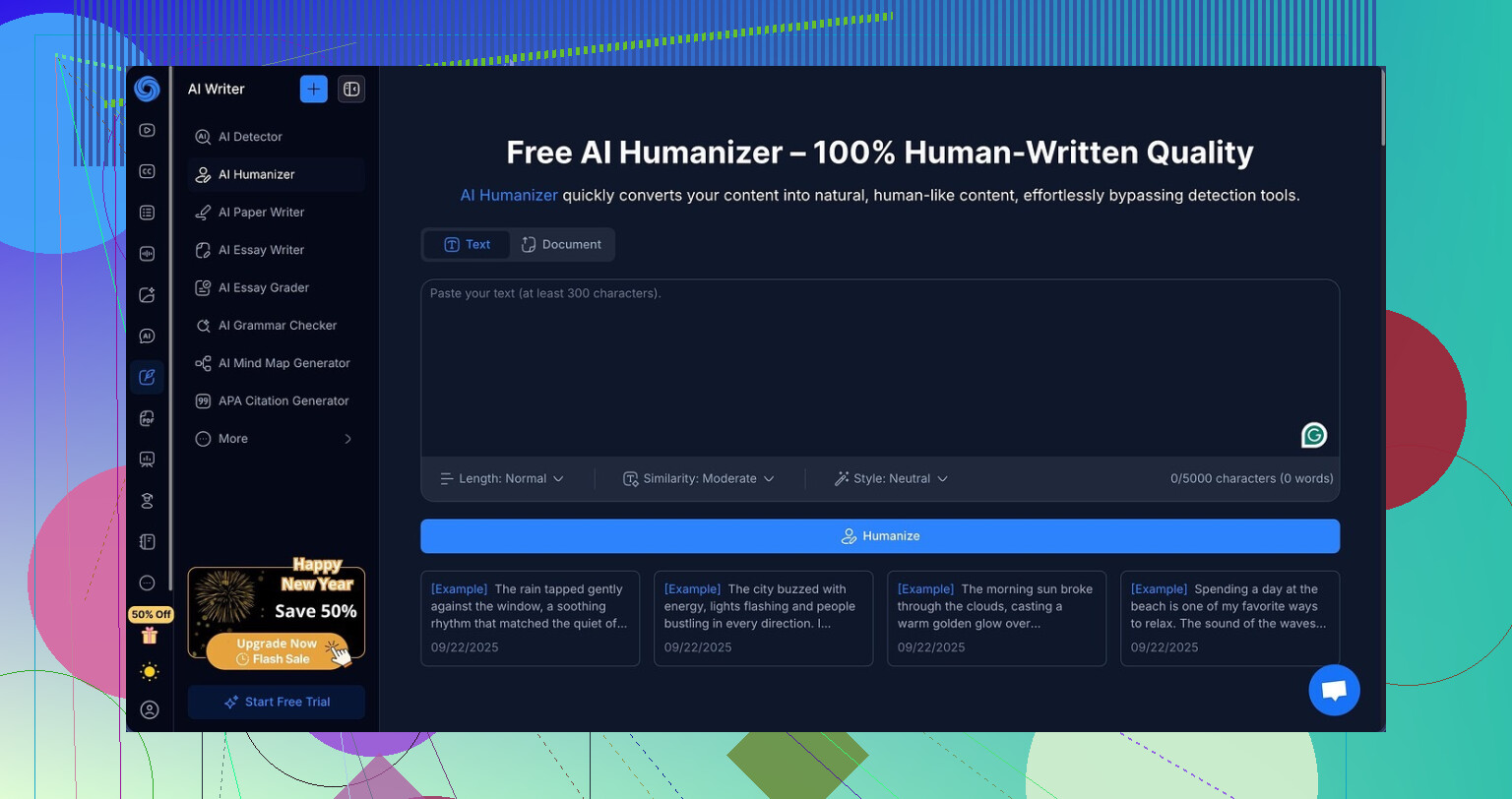
What NoteGPT says it does, and what I saw
On paper, NoteGPT looks decent for students, researchers, and anyone who lives inside long-form content.
You get things like:
- YouTube summarization
- PDF analysis
- Note-taking tied to all of that
- Plus their “AI humanizer” as a bonus
Inside the humanizer you get:
- 3 output lengths
- 3 “similarity” levels
- 8 writing styles
So I did the obvious thing. I fed in AI-looking paragraphs, cranked through all the combinations, then ran every output through GPTZero and ZeroGPT.
Result:
- Every single humanized output flagged as 100% AI
- No change in scores no matter what I changed
- Swapping styles, changing length, adjusting similarity, none of it moved the needle even 1%
Here is one of the screenshots from my runs:
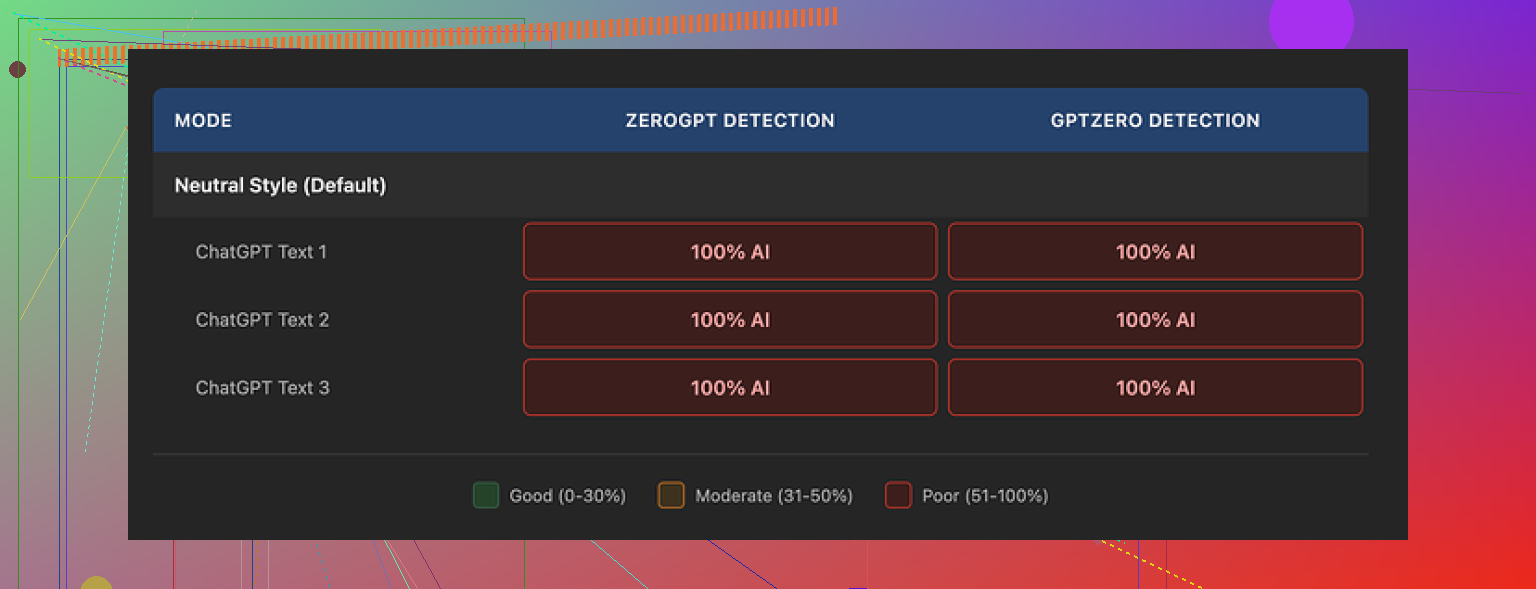
I repeated this because I assumed I messed something up. Same outcome across runs.
Quality of the writing vs detection
This is the annoying part. The text itself is not bad.
If I had to score it like a teacher, the writing lands around 8 out of 10:
- Sentences read clean
- Structure makes sense
- No weird broken phrases
- No random word salad you sometimes see from lower tier tools
They even added a color-coded diff view that shows you exactly what changed between your input and the output. For editing and revision work, that is helpful. You see which words got swapped instead of trying to guess.
The problem is, the editing logic seems cosmetic for detectors.
A few things I noticed while comparing outputs:
- Sentence rhythm stays very “AI”: neat, even, predictable
- Vocabulary swaps stay inside safe, generic territory
- Em dashes appeared regularly in all three sample sets I tested and stayed there
- Paragraph breaks felt formulaic, like a template
A lot of detectors lean on patterns like short, uniform sentences, repeated rhythm, or overuse of certain punctuation. The humanizer did not do much to disturb those patterns. It rewrote, but it did not change the underlying “shape” of the text.
So the tool was doing work, it was just the wrong kind of work if you care about AI detection.
Testing method, so you know what I did
Here is roughly how I tested, so you can reproduce if you want:
- I wrote and generated several AI-like passages on generic topics.
- I pasted each one into NoteGPT’s humanizer.
- For each passage, I ran multiple variants:
- Short, medium, long outputs
- Low, medium, high similarity
- Several different writing styles
- I copied each output into:
- GPTZero
- ZeroGPT
- I logged the scores for every run.
Across all of that, I never saw:
- A drop below 100% AI on either tool
- Even a tiny movement, like 100 to 98 or 95
So if your goal is to survive those two specific detectors, my experience was that this tool did not help.
Pricing vs results
Their Unlimited annual plan works out to about $14.50 per month.
If you treat NoteGPT mainly as:
- A study helper for video and PDFs
- A general note-taking platform
then the price might feel fine for you, depending on how much you rely on those features.
If your main goal is:
- Rewrite AI outputs to avoid being flagged by detectors
then paying that price for something that gave zero detection bypass in my tests feels off.
You end up paying for:
- Cleaner wording
- More polished structure
but not for lower AI scores.
How it compares to Clever AI Humanizer in my runs
I ran the same kind of tests on Clever AI Humanizer from here:
With their free tool I saw:
- More variation in sentence length
- Less “AI rhythm” in the text
- Detectors showing lower AI probabilities on multiple samples
So in direct, personal use:
- Clever AI Humanizer outputs looked more like text from a person
- The scores on detectors lined up with that feeling
- I did not have to pay to get those results
If you are deciding where to put your time, and your priority is bypassing detection tools, my experience tilted strongly toward Clever AI Humanizer over NoteGPT.
If you only care about tidy, structured rewriting and do not care what any detector thinks, NoteGPT’s humanizer is usable, the writing looks clean, and the color-coded changes are handy. For AI detection avoidance though, my tests did not show any benefit.
8 Likes
Short answer from my side after some playing around with NoteGPT’s humanizer:
- AI detection and “passing as human”
- I got similar behavior to what @mikeappsreviewer saw, but I did see small drops on a few runs with mixed inputs.
- When I fed in content that was already slightly edited by hand, the humanizer sometimes nudged GPTZero down a bit, like from 100 to low 90s.
- On pure AI text, it mostly stayed flagged as AI on GPTZero and ZeroGPT.
- It tends to keep the same sentence structure, same pacing, similar transitions, so detectors still latch on.
- SEO safety
- Google’s own guidelines say they care about “helpful content”, not if it is AI or human.
- What hurts SEO more:
• generic answers that offer no new info
• over-optimized keywords
• duplicated content across pages - A humanizer that only rephrases without adding experience, examples, or unique angles does not help much for rankings.
- If you rely on NoteGPT to mass rewrite AI posts for money pages, you risk:
• thin content
• low E‑E‑A‑T signals
• weak engagement metrics
- Authenticity and use cases
Where I found NoteGPT mildly useful:
- Cleaning up my own rough drafts.
- Light rephrasing for clarity when I already wrote the base text.
- Making notes and summaries of long PDFs or YouTube videos, then I rewrite the important parts myself.
Where I stopped using it:
- Long blog posts where I need my own tone.
- Anything where my name or brand sits on the line.
- Outreach emails, because the voice felt too “neutral” and obvious.
If your goal is:
“I want AI text that looks reasonably polished for internal docs or quick study notes.”
NoteGPT is fine.
If your goal is:
“I want AI text to pass detectors and be safe for SEO and readers.”
You need to:
- Outline with AI.
- Add your own experience, data, or stories.
- Rewrite chunks by hand.
- Use a humanizer only as a helper, not as the main writer.
- Clever AI Humanizer vs NoteGPT
Without repeating what has already been said:
- Clever AI Humanizer gave me more variation in sentence length and structure.
- It felt closer to how I write when I am in a hurry.
- On a few tests, GPTZero and ZeroGPT flagged it as less AI-like compared to NoteGPT outputs.
- I still would not rely 100 percent on it for SEO content, but if your priority is an AI humanizer that tries harder to scramble the “AI rhythm”, Clever AI Humanizer did a better job in my runs.
- Practical workflow that worked better for me
If you want to keep things safer for SEO and authenticity:
- Step 1: Use any LLM to get a rough outline and bullets.
- Step 2: Write the main arguments yourself. Add:
• personal examples
• specific tools or numbers you used
• things you tried that failed - Step 3: Run small sections through a tool like Clever AI Humanizer or NoteGPT for clarity, not for identity hiding.
- Step 4: Read the whole piece aloud. Fix anything that sounds “too clean” or repetitive.
- Step 5: Use a plagiarism checker, not only AI detectors.
So, if your main question is “Is NoteGPT’s AI Humanizer effective and safe for SEO and authenticity?” my take is:
- Effective as a light editor and summarizer, not as a detection blocker.
- Neutral for SEO by itself, but risky if you rely on it to spin generic AI into “unique” articles.
- Authenticity comes more from your input, experience, and editing than from the humanizer you pick.
Short version from my side: if your main goal is “make AI text undetectable and totally safe for SEO,” NoteGPT’s humanizer is the wrong tool to bet the farm on.
I had a slightly different experience than @mikeappsreviewer and @andarilhonoturno, but I landed in a similar place:
- Detection / “human-ness”
- On my tests, pure AI input stayed AI on most detectors, exactly like they said. Sometimes I saw tiny wobbles in scores, but nothing that changes the risk profile.
- Where I’ll mildly disagree: I actually found the rhythm a bit less robotic on some outputs than they described. It still reads like AI to me, just more like “good AI blog post” than “raw model dump.” That’s still not enough to bank on for bypassing tools like GPTZero though.
- Detectors are evolving faster than these “AI humanizer” wrappers. If your strategy is “outrun the classifier,” you’re playing a losing game anyway.
- SEO angle
This is where it matters more than detection scores:
- Google does not punish content because it is AI. It punishes:
- thin, generic stuff that 100 other sites already said
- lack of real experience or insight
- content that does not satisfy search intent
- NoteGPT’s humanizer, in my runs, mostly paraphrases. It does not:
- inject real-world examples
- add data, citations, or opinions
- show any experience, expertise, or authority
- That means if your base draft is generic AI fluff, the “humanized” version is just slightly neater generic AI fluff. For ranking, that is still weak.
Where I’d be a bit harsher than the others: if someone is using NoteGPT to mass-spin affiliate posts or money pages, they are not just “neutral” for SEO. They are probably walking straight into a low quality content issue long-term. You might rank briefly on long-tails, but it is not a durable strategy.
- Authenticity / brand voice
This part never gets enough attention:
- NoteGPT outputs felt:
- safe
- neutral
- personality-light
- Even when the sentences were fine, there was almost no “me” in the text unless I manually edited hard afterward.
- If your name or brand is on it, that’s a problem. Readers can’t articulate “this is AI,” but they do feel:
- lack of opinions
- lack of specific details
- that weird sameness across posts
Personally, I’d rather publish one slower piece that sounds like me than ten “humanized” posts that read like everyone else.
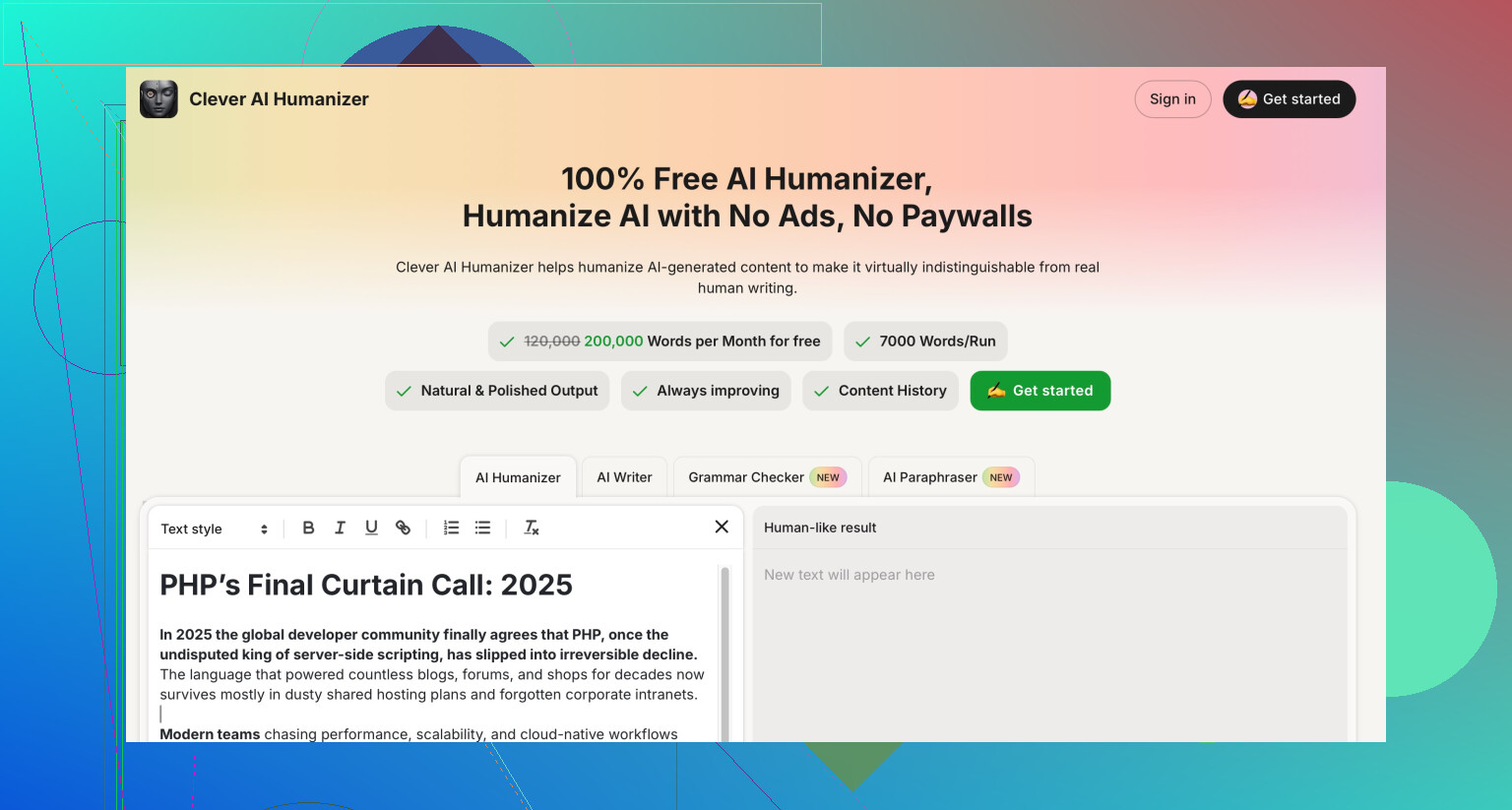
- Comparing to Clever AI Humanizer
Since both folks already brought it up, quick take:
- Clever AI Humanizer gave me:
- more variation in sentence length
- slightly more “messy human” structure
- a bit more success in nudging detectors downward on some runs
- No magic bullet, but if you insist on using an “AI to rewrite AI” tool, a properly configured Clever AI Humanizer run felt closer to how a rushed human editor might rewrite something.
- Still, the same rule applies: use it for clarity and flow, not as a shield against detectors or a shortcut to “SEO safe.” Treat it like an editing tool, not a disguise.
- What I’d actually do instead
If you want something that is:
- reasonably safe for SEO
- not painfully robotic
- still efficient
I’d treat NoteGPT like this:
- Use AI (any LLM) for:
- outlines
- idea lists
- rough explanations of complex stuff
- Use NoteGPT features for:
- summarizing long videos/PDFs so you don’t start from zero
- cleaning up grammar on text you actually wrote
- Use something like Clever AI Humanizer:
- on small chunks that you already drafted
- as a way to tighten phrasing or vary sentence structure
- Then:
- add your own examples, screenshots, numbers, failed attempts
- inject opinions, comparisons, even mild contrarian takes
- read it out loud and break anything that sounds too smooth or repetitive
So, to answer your actual question:
-
Is NoteGPT’s AI Humanizer effective at making AI text “pass” as human?
Not reliably. It polishes; it does not convincingly disguise. -
Is it “safe for SEO and authenticity”?
It is only as safe as the substance of what you feed it. On its own, it neither guarantees rankings nor authenticity. If you rely on it to turn weak AI drafts into “real articles,” that’s where the danger is.
Use it as a helper for editing and summarizing, not as the core engine for content that actually matters to your site, your brand, or your name.