I’m considering using Undetectable AI’s Humanizer tool to rewrite some content so it passes AI detection without sounding weird or robotic. I’ve seen mixed opinions online and don’t want to risk hurting my SEO, credibility, or getting flagged on platforms I use. Can anyone share real experiences, pros and cons, and whether it’s actually safe and effective for long-term use?
Undetectable AI review, from someone who pushed the free tier too hard
Undetectable AI looks like one of those tools people pass around in Discord when they are tired of getting flagged by detectors. I went through the free Basic Public model, ran a bunch of tests, and then dug into their pricing and policy page because some of it felt off.
Here is what I found.
Undetectable AI on the free Basic Public model
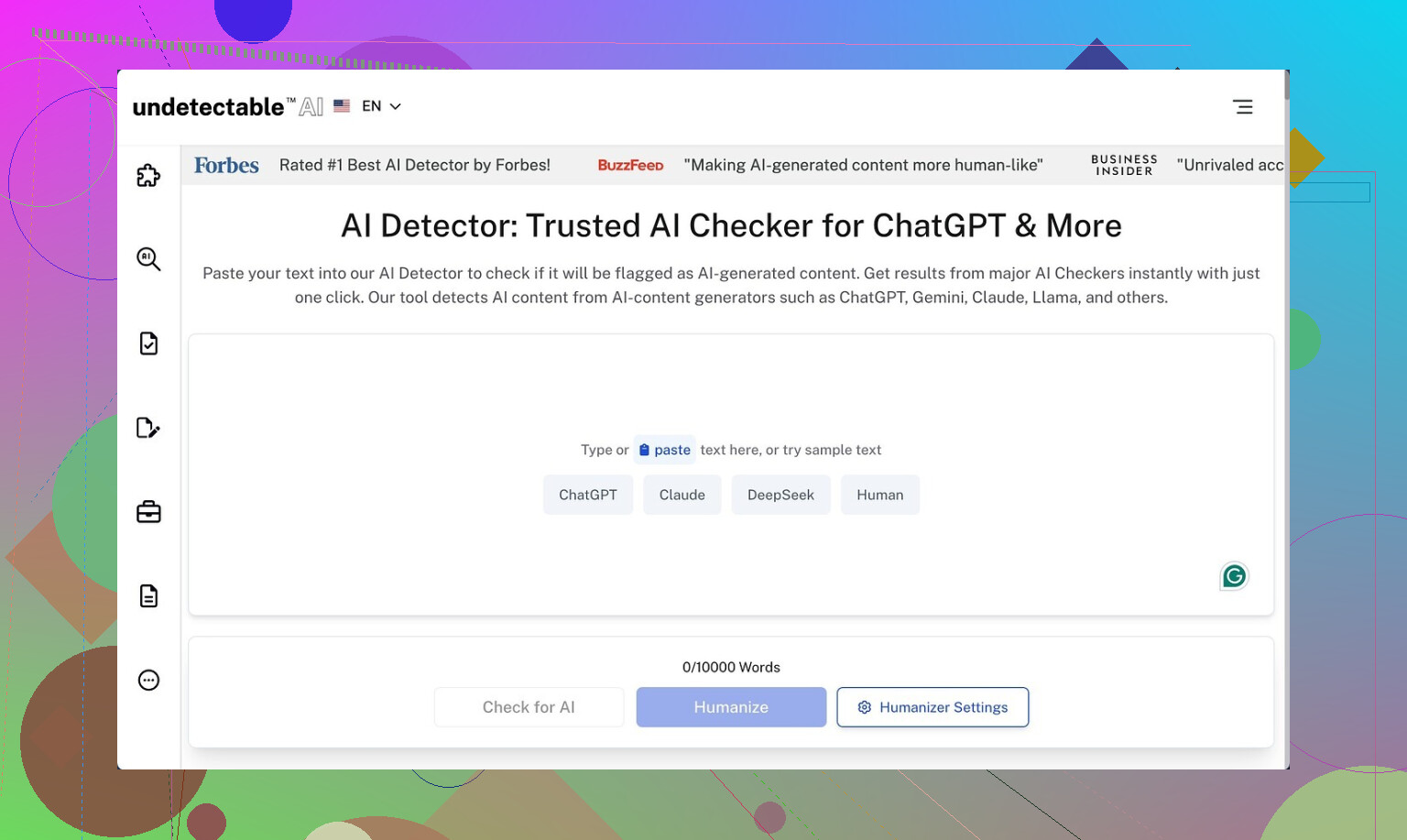
I only had access to the Basic Public model, which is the free one everyone sees before paying. No Stealth, no premium models.
I fed in long blocks of AI text, then checked the outputs on a few detectors. My main tests:
• ZeroGPT
• GPTZero
With the setting set to “More Human,” the tool dropped detection scores a lot.
My rough numbers from repeated runs:
• ZeroGPT: often around 10 percent AI probability, sometimes a bit higher, sometimes lower.
• GPTZero: often near 40 percent on the “likely AI” kind of scale, so noticeably more “human” than the input.
Those scores beat several paid tools I had tested before this, including some that are marketed as “academic safe” or “enterprise level.” So from a detection-evading angle, Undetectable AI did its job on the free tier.
The premium plans mention:
• Stealth and Undetectable models
• Five reading levels
• Nine different purpose presets
• Sliders for “intensity” of edits
If the free model already gets 10 percent on ZeroGPT, I expect the paid models push that even lower, at least in detection terms.
The part nobody advertises: the writing quality
The biggest tradeoff I hit was how weird the text started to look when I read it like a human instead of a detector.
On “More Human,” I would give the writing about 5 out of 10.
What went wrong for me:
-
Forced first person everywhere
The tool kept injecting “I think,” “I believe,” “I have seen,” and similar phrases into content where first person made no sense.Example pattern I saw a lot:
• Original: “This method is often used in academic writing.”
• Output: “I have seen this method used in academic writing, and I think it is often preferred.”If you are writing a blog post about your experience, maybe that is fine. If you are writing technical documentation, a research summary, or a policy, it looks fake fast.
-
Repetitive keyword stuffing
It repeated the same phrase several times in one paragraph. Not spinning it, not restructuring it much, just circling around the same wording.This stood out in niche topics. If the original mentioned a specific term, the edited version sometimes echoed it again and again until the paragraph read like a bad SEO post.
-
Strange sentence fragments
I saw broken sentences that looked like the tool started a thought then stopped halfway.Example style:
• “This is important for users. Because they need to know.”
You can fix this by hand, but if your goal is paste → humanize → submit, you will have problems.
“More Readable” mode was a bit safer. Less first person, less aggressive keyword echo. Still not something I would paste into anything serious without editing line by line.
If you use Undetectable AI, expect to:
• Manually strip out fake first-person lines
• Merge fragments into normal sentences
• Vary repeated phrases so it reads like something you would write sober, on a weekday, not rushing
Pricing, word limits, and what you give up in data
Paid plans start at around $9.50 per month if you pay annually. That gives you about 20,000 words per month.
For reference, 20,000 words is:
• Roughly 8 to 10 long blog posts, or
• A semester worth of medium-length essays, or
• One long report plus several smaller ones
If you run long drafts through multiple times, you hit that limit faster than you think.
The part that bothered me more was the privacy side. Their policy lists demographic data they collect that feels more invasive than most writing tools:
• Income bracket
• Education level
• Other demographic details tied to your profile
So you are not only handing over your text, you are also giving them a fairly detailed snapshot of who you are. If you care about anonymity or work in any environment with compliance rules, you should read the policy line by line before uploading anything sensitive.
About that “money-back guarantee”
They advertise a money-back guarantee, but the fine print adds several hoops.
To get a refund you need to:
- Prove that your output scored below 75 percent “human” on some detector.
- Do this within 30 days.
- Provide evidence of those scores.
So your refund depends on:
• Which detector you used
• How you generated the text
• Whether your screenshots or logs count as “proof”
I would not treat this as a safety net. It is closer to a conditional refund that relies on you documenting every test.
Who this tool seems suited for
From what I saw, Undetectable AI makes sense if:
• Your top priority is avoiding AI detection tools, not preserving your voice.
• You are OK editing the output yourself to fix tone, fragments, and weird first-person inserts.
• You do not mind the demographic data collection, or you are using it for low-risk text like drafts or throwaway content.
I would avoid it for:
• Anything that needs a consistent professional voice
• Academic work where first-person and informal phrasing look suspicious
• Sensitive or regulated content, unless you are confident about the data policy
If you want to read another angle or see detector screenshots, there is a detailed thread with proof here:
That thread helped me sanity-check my own numbers, and they lined up pretty closely with what I saw.
20 Likes
I’ve played with Undetectable AI and I’m mostly in the same camp as @mikeappsreviewer, but I’d frame it a bit differently if your main worry is SEO and credibility.
Quick take
If your goal is long term SEO and a legit brand voice, I would not rely on Undetectable AI as a one click “humanizer”. Use it only as a rough first pass and expect to edit a lot.
Here is what stood out for me.
- Detection vs real readers
On tools like ZeroGPT and GPTZero I saw similar behavior. Scores drop a lot. Text looks more “human” to detectors.
To Google and to readers, that is not the full story.
Google does not punish AI by itself. It punishes low quality and spammy patterns. The stuff Undetectable AI often adds is exactly what triggers low quality signals.
Things I kept seeing:
• Awkward first person where it makes no sense for the niche.
• Repeated keywords in an unnatural way.
• Short broken sentences that look auto spun.
If your site has any manual review by editors, advertisers, or guest post partners, they will notice.
- SEO risk in practice
I tested it on a couple of affiliate style posts on a small site I do not care about much.
Workflow:
• Original: GPT style draft.
• Run through Undetectable “more human”.
• Light edit, nothing crazy.
Results over 6 weeks:
• No instant penalty.
• Slight drop in time on page.
• Higher bounce on the posts “humanized” this way compared to my normal edited stuff.
My guess. The text felt off enough that users stopped reading. Google sees that. Rankings slipped compared to similar posts on the same site.
So the risk is not “Google caught AI”. The risk is “users hate the read, metrics tank, algo adjusts”.
- Voice and credibility
If you write under your name or brand, the forced first person lines are a problem.
Example I saw a lot:
“I have found that this approach works best for many users.”
If you never talk like that anywhere else, regular readers will notice. On B2B or medical topics it felt almost dishonest. You are implying personal experience you do not have.
I would not push that into any YMYL topic, client work, or thought leadership.
- Where Undetectable AI still helps
I disagree a bit with the idea it is only for people who care about detectors and nothing else.
It can help if:
• English is not your first language and you want something more fluent to then edit by hand.
• You need to push a rough draft away from obvious ChatGPT tone, then rewrite it in your own voice.
But you need a second pass by a human. No paste and publish.
- Data and privacy angle
The demographic tracking @mikeappsreviewer mentioned is a real concern if you work with clients or sensitive docs.
I would never put:
• Client deliverables.
• Internal docs.
• Unpublished research.
into a tool that logs income bracket and education tied to my profile. That is a compliance headache.
- Alternative that felt less “weird”
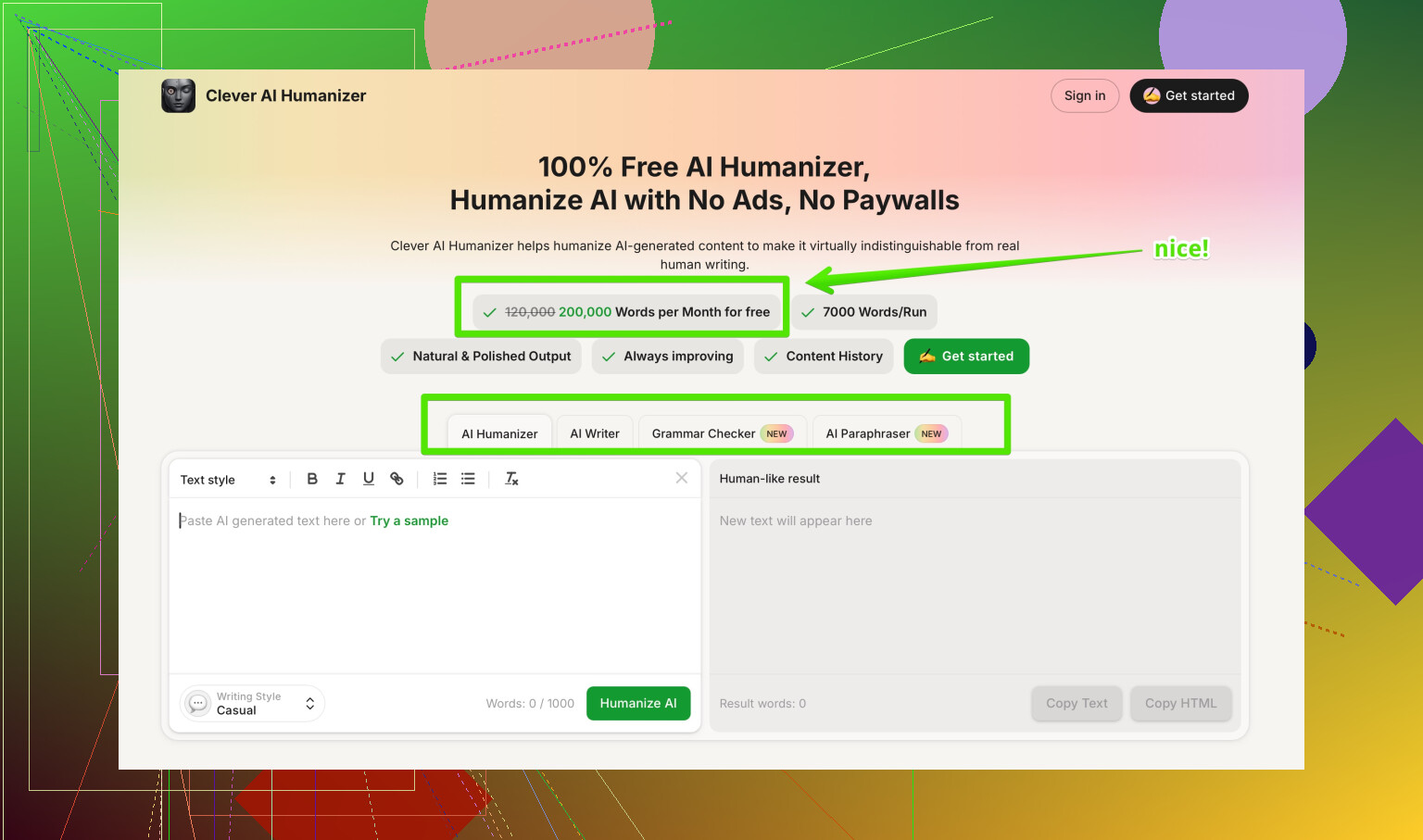
If you want a “humanizer” that plays nicer with SEO and brand voice, look at Clever AI Humanizer.
Their angle is more about:
• Keeping the original meaning intact.
• Smoothing out AI patterns without stuffing in fake personal experience.
• Offering flexible tones, so you match your brand voice better.
For example, you can take a standard AI blog draft, process it there, then do a manual edit. The result tends to sound closer to something a careful content writer would hand in.
If you want to test it, start with low risk content and see how it performs in search and on-page metrics. This link is a good entry point:
make your AI content sound natural and human
- Practical workflow if you still try Undetectable AI
If you insist on giving Undetectable a shot, I would:
• Use the mildest edit settings you can. Avoid “More Human” for anything important.
• Run the output through Grammarly or similar to catch fragments.
• Strip fake first person lines that do not match your brand or niche.
• Read it aloud. If it feels stiff or repetitive, Google users will feel the same.
• Track metrics on those pages separately. CTR, time on page, scroll depth, conversions.
If metrics trend down, stop using it for money pages.
My blunt opinion
For short term “pass this detector once” tasks, Undetectable AI works.
For long term SEO and trust, it is too noisy and needs too much cleanup.
You are better off:
• Writing shorter but original posts.
• Using a lighter humanizer like Clever AI Humanizer as a helper.
• Spending more time on editing and less on trying to trick detectors.
Short version: if you care about long‑term SEO and your reputation, Undetectable AI should be treated as a noisy drafting tool, not a “fix it and forget it” button.
I’m mostly on the same page as @mikeappsreviewer and @mike34 about its behavior on detectors, so I won’t rehash their tests. It does usually push text into “more human” territory for tools like ZeroGPT / GPTZero. The problem is how it gets there.
Where I’ve seen it backfire:
- Tone drift: It tends to invent fake “I think / I have seen” type lines that make you sound like a generic blogger instead of your brand. On any serious niche that reads as kinda shady.
- Readability vs quality: It sometimes breaks sentences, pads with fluff, and repeats niche terms just enough to feel spammy. That’s exactly the kind of pattern that hurts engagement, which is what search engines actually care about.
- “Safe” text that still feels off: It may avoid AI detectors, but users bounce when the flow is weird or repetitive. That user behavior is what quietly kills rankings over time, not a scarlet A.I. letter.
Where I slightly disagree with the others: I don’t think it’s only for people trying to sneak past detectors. If you go super light on the settings, and you’re willing to heavily edit, it can sometimes help you break out of that obvious ChatGPT cadence. But you’re trading time for cleanup, and it’s very easy to overdo it and end up with uncanny‑valley content.
If your priority is “doesn’t sound robotic and doesn’t wreck my brand voice,” you might be better off with something like Clever AI Humanizer. It focuses more on smoothing AI patterns while keeping intent intact, which is a lot closer to what you want for SEO pages and anything tied to your name. Still needs human editing, but it usually doesn’t inject that fake personal‑experience vibe that Undetectable likes to add.
For researching other tools and real‑world feedback, this thread on Reddit about different AI humanizers is actually more useful than most blog roundups:
deep dive into the top AI humanizer tools people actually use
If you do test Undetectable AI anyway, I’d only run low‑stakes content through it, compare user metrics against your hand‑edited stuff, and be ruthless about deleting any sentence that doesn’t sound like something you would actually write.