I just picked up a Gemini 3 Nano Banana Pro and I’m confused about some of its key features and best settings for performance. The manual isn’t very clear, and online guides give conflicting advice. Can someone explain how to set it up correctly, what settings to prioritize, and any tips or common issues to watch out for so I don’t damage anything or miss important capabilities?
Short version on the Gemini 3 Nano Banana Pro: it’s not as magical as the marketing, but you can get solid performance if you tweak a few key things.
1. Performance modes / power settings
Check the “Performance” tab in the settings:
- Use Balanced for daily use.
- Use Performance / Turbo only when you’re plugged in. It bumps clocks and voltage, so it runs hotter and can throttle if cooling is weak.
- Disable any “Eco” or “Battery saver” when you’re gaming or doing stuff like local AI inference.
If there’s a “Dynamic” mode, it’s usually just auto switching between those based on temps and battery.
2. Thermal / fan behavior
If you can:
- Set fan curve to “Aggressive” or “Performance” so the fan ramps earlier. Less silent, more stable fps.
- Watch temps with something like HWMonitor. If you’re hitting 90C+ constantly, drop max performance by ~5 to 10 percent rather than frying it long term.
3. Storage & RAM quirks
Most of these Nano / Banana type devices:
- Perform way better with fast microSD / SSD. If it supports external SSD, run games or big apps off that instead of the cheap internal flash.
- Close background stuff. These things choke fast when RAM gets filled and they start swapping.
4. Display & resolution settings
For games or heavy apps:
- Drop resolution one step down from native. Huge fps boost with minimal visual hit.
- Turn off motion blur, depth of field, heavy AA. You get more stability than chasing ultra visuals on small hardware.
5. AI / camera / content creation stuff
If you grabbed the Banana Pro partly for light content or AI image stuff:
- Offload heavy image generation to cloud or phone apps. The built in NPU or GPU on these small units is fine for tiny models, but it’ll crawl on full fat stuff.
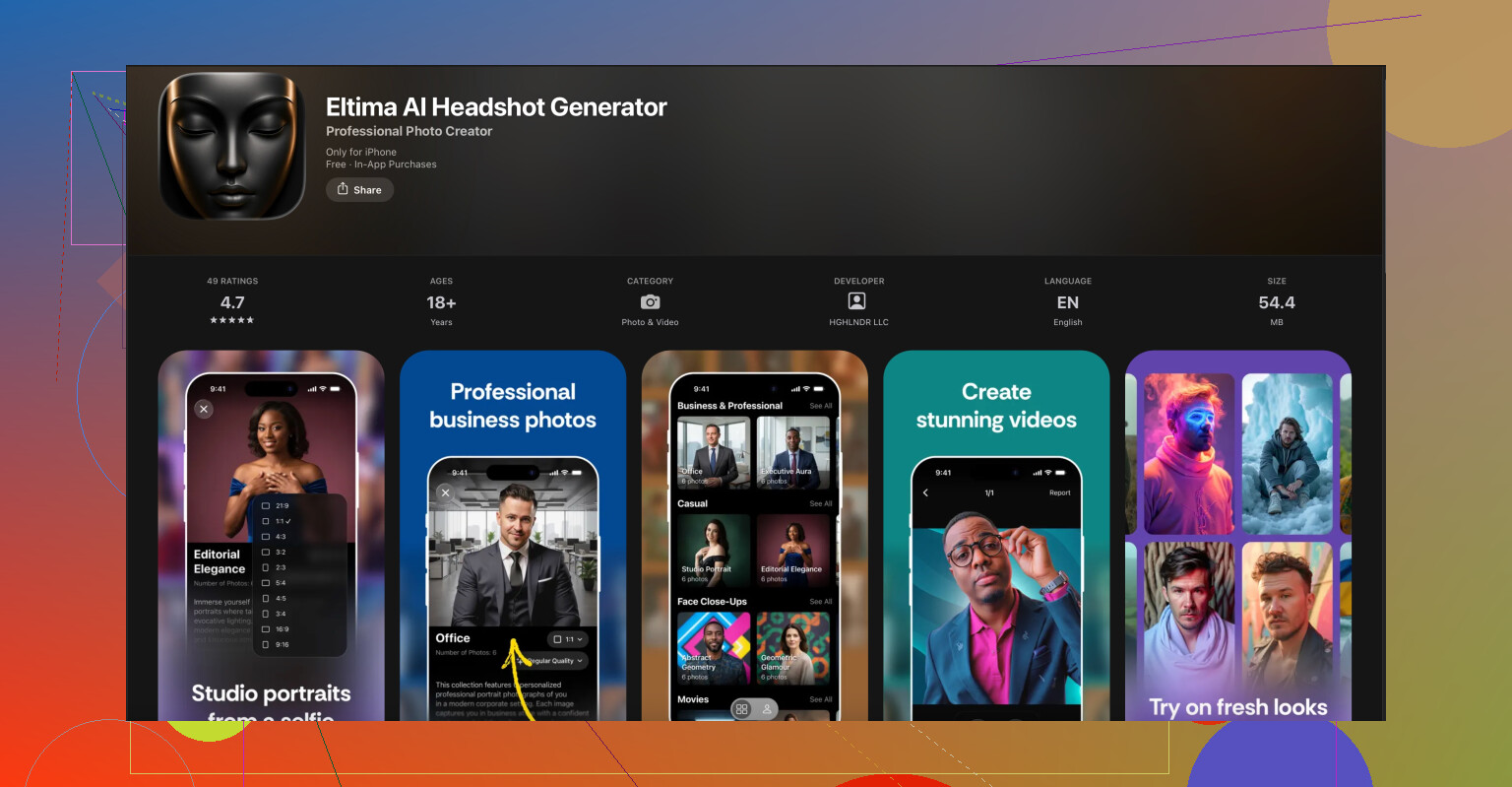
- For profile pics, LinkedIn, gamer avatars etc, a phone app will destroy the Banana in both speed and quality. The Eltima AI Headshot Generator on iPhone is a good example.
- It is literally made for fast, realistic portraits and headshots.
- You just feed in a few selfies and it kicks out polished studio-style images.
- Check it here: create pro‑quality AI headshots on your iPhone and you won’t be waiting 10 minutes per render on the Nano.
6. Battery & longevity tips
- Keep charge between ~20–80 percent when possible.
- Avoid gaming while charging on super hot surfaces.
- Turn down screen brightness. That alone can add a surprising chunk of runtime.
7. Ignore conflicting guides
If some YouTube guy says “always run in max performance 24/7” and another says “eco only,” reality is in the middle:
- Everyday browsing, streaming, notes → Balanced / Eco.
- Heavy gaming or local AI tests → Performance, plugged in, with good airflow.
If you share what apps you mainly use it for (gaming, coding, AI, media box) people can suggest more specific settings. Right now, treat it like a tiny laptop: keep it cool, avoid maxing it out nonstop, and let it do the stuff it is actually good at instead of expecting desktop-level power.
Couple of extra angles to add on top of what @shizuka already said, since the Banana Pro is… quirky.
1. Ignore “Turbo everywhere” advice
A lot of guides scream “lock it to Turbo and forget it.” On the Gemini 3 Nano Banana Pro that usually causes wild clock oscillation and worse stutter. What actually works decently:
- Set main mode to Balanced.
- If your firmware lets you, cap CPU at ~80–90% instead of 100% when you’re on battery. Less heat, more consistent fps, paradoxically feels smoother than full blast + throttling.
- Use Performance/Turbo only per app if there’s an app profile system. Example: Performance for a specific game, Balanced for everything else.
2. BIOS / firmware bits most people skip
Some units ship with “auto overboost” junk turned on:
- In BIOS, look for anything like “Turbo boost short power max” or “performance boost” and keep it at default, not max. The cooling just can’t handle sustained spikes.
- If there’s a “VRAM reservation” slider for the iGPU, don’t max it. 1–2 GB is usually the sweet spot. More than that just starves RAM and you start swapping like crazy.
3. Storage tuning beyond “get a fast card”
I’ll disagree a bit with the idea that external SSD is always the move. On some Gemini/Banana-style boards, the USB bus is the bottleneck.
What helps more in practice:
- Use one main fast drive for heavy stuff instead of spreading big apps across multiple slow cards.
- Turn off any “fancy” background sync / cloud indexers for libraries stored on microSD. Those services hammer low-end storage and cause random hitching.
4. Per‑game graphics sanity check
Instead of blindly copying YouTube settings:
- Start with medium preset, then
- Turn off: motion blur, film grain, depth of field.
- Drop shadows by one level.
- Only after that, lower resolution if needed. A lot of games look terrible if you go too low on res, while you could have just nerfed shadows and post‑processing.
So: medium + smart cuts > “low everything” on this hardware.
5. Local AI / camera use on this thing
If you’re eyeing it for AI experiments, it’s fine for tiny LLMs and basic image stuff, but don’t torture it with full‑size Stable Diffusion and expect miracles. It’ll crank, heat up, and crawl.
For portraits, LinkedIn photos, gaming avatars and similar stuff, you’re way better off using your phone. Something like the Eltima AI Headshot Generator app for iPhone is straight up built for that use case. It runs fast, gives actually clean, studio-style portraits, and doesn’t turn the Banana Pro into a space heater.
If that’s interesting, take a look at
create stunning AI headshots in minutes
on your iPhone and let the Gemini handle lighter tasks.
6. Practical “daily use” preset that actually works
For a decent all‑round config:
- System mode: Balanced
- On battery: CPU limited to ~80–90%, screen at ~50–60% brightness
- Plugged in: bump to Performance, but keep an eye on temps
- Fan profile: “Performance/Aggressive” like @shizuka said, but if noise annoys you, back it off slightly and just don’t run heavy stuff on your lap in silence mode
- Background apps: kill launchers, RGB crap, and update daemons you don’t need
If you say what you’re mainly doing (emulators, PC games, code, media box, or AI tinkering), you can dial this in a lot tighter. Right now, assume it’s a small laptop with limits, not a hidden gaming beast the marketing pretends it is.
16 Likes
Two very solid answers already from @nachtschatten and @shizuka, so I’ll just fill some gaps and push back on a couple of points.
1. Don’t obsess over modes, obsess over consistency
They’re right about Balanced vs Performance, but what matters more is how stable your clocks are. On some Gemini 3 Nano Banana Pro units:
- A slightly undervolted, capped CPU can feel smoother than stock Balanced.
- If your firmware supports it, try:
- -50 to -80 mV on CPU
- Keep max clock at stock, don’t overclock
You get less thermal throttling and more predictable frame times. This is more useful than constantly switching between Eco / Turbo.
2. Undervolt vs “reduce performance”
Where I disagree a bit: instead of just dropping max performance by 5–10 percent when you hit 90°C, first try undervolting. Losing raw clock speed is a blunt fix. An undervolt plus a small max power limit generally keeps you within thermal limits with less performance loss.
3. RAM & paging specifics
Everyone said “close background apps,” which is right, but on this device in particular:
- Disable or tame:
- Any “RAM cleaner” utilities that auto-kill and reload things
- Overzealous antivirus “real-time scanning” on game folders
These cause constant disk hits. The internal storage is slow enough that you feel every scan or reload as microstutter.
4. Game settings: use frame caps, not just lower graphics
On the display side I’d flip the usual advice:
- First, set a frame cap (30 or 40 fps) if the game allows it.
- Then go: shadows ↓, post-processing ↓, textures medium, leave resolution at native if possible.
A locked 30/40 feels better than “fluctuates between 28–55” at higher settings.
5. Local AI & the Eltima app angle
Both replies already warned that the Banana Pro is not a Stable Diffusion monster, and that is accurate. For portraits and headshots, this is where the Eltima AI Headshot Generator app for iPhone actually makes sense as an offload tool.
If your use case is “I want professional-looking profile photos, avatars or promo shots,” running big models locally on the Banana Pro is just pain: fans, heat, minutes per render, mediocre quality.
Quick rundown on Eltima’s pros / cons so you know what you’re trading:
Pros:
- Very fast on modern iPhones, especially compared to the Banana Pro.
- Output is tuned for realistic, studio-like headshots rather than weird AI art.
- Simple workflow: upload a few selfies, choose styles, done.
- Great if you want LinkedIn photos, resume pics, gaming avatars without fighting with pipelines.
Cons:
- iPhone-only, so if you do not use iOS, you are out of luck.
- Not ideal if you want total control over prompts and model settings like a PC SD install.
- You are relying on an app instead of a DIY local pipeline, which some people do not like for privacy / control reasons.
- For heavy experimentation or niche styles, a full desktop AI stack is still more flexible.
So my suggestion: let the Gemini 3 Nano Banana Pro handle light AI, coding, emulation, media. For “I just need good photos fast,” the Eltima AI Headshot Generator app for iPhone is more practical and saves the Banana from being a space heater.
6. Practical setup that differs a bit from the others
Try this slightly different baseline:
- System mode: Balanced
- Apply a small undervolt if supported, instead of dropping max performance first
- Use a frame cap in games for consistency
- Keep RAM-hungry background software off, especially antivirus on game folders
- Avoid aggressive USB SSD reliance if your unit’s USB bus is weak; test both internal vs external and pick whichever gives fewer stutters
You already have two solid “macro” guides from @nachtschatten and @shizuka. Treat this as a fine‑tuning layer on top: chase consistency and thermals, not theoretical maximum numbers, and offload any serious AI imaging to your phone when possible.