I wrote an essay using AI, but it feels robotic and unnatural. I really need this essay to sound more like a real person wrote it, especially for my class assignment. Any practical tips or tools to help humanize AI writing would be awesome. Thanks in advance for any advice.
Honestly, AI writing comes out sounding like C+ student who read the Wikipedia summary, then tried to impress the teacher. To fix that, you gotta mess it up a bit—ironically, like a real person would. First thing, ditch all those overused ‘Moreover,’ ‘Furthermore,’ and robotic transitions. Toss in some contractions—don’t, can’t, it’s—so you sound less like a 1950s textbook. Make your sentences uneven: combine a couple, then follow up with a short, punchy one. Toss in a question or two, relate to your own (real or made-up) experience, and hedge your bets—nobody talks in absolutes. Use simple, common words instead of “utilize” and “ameliorate.” Read your essay out loud and if you cringe, rewrite those lines.
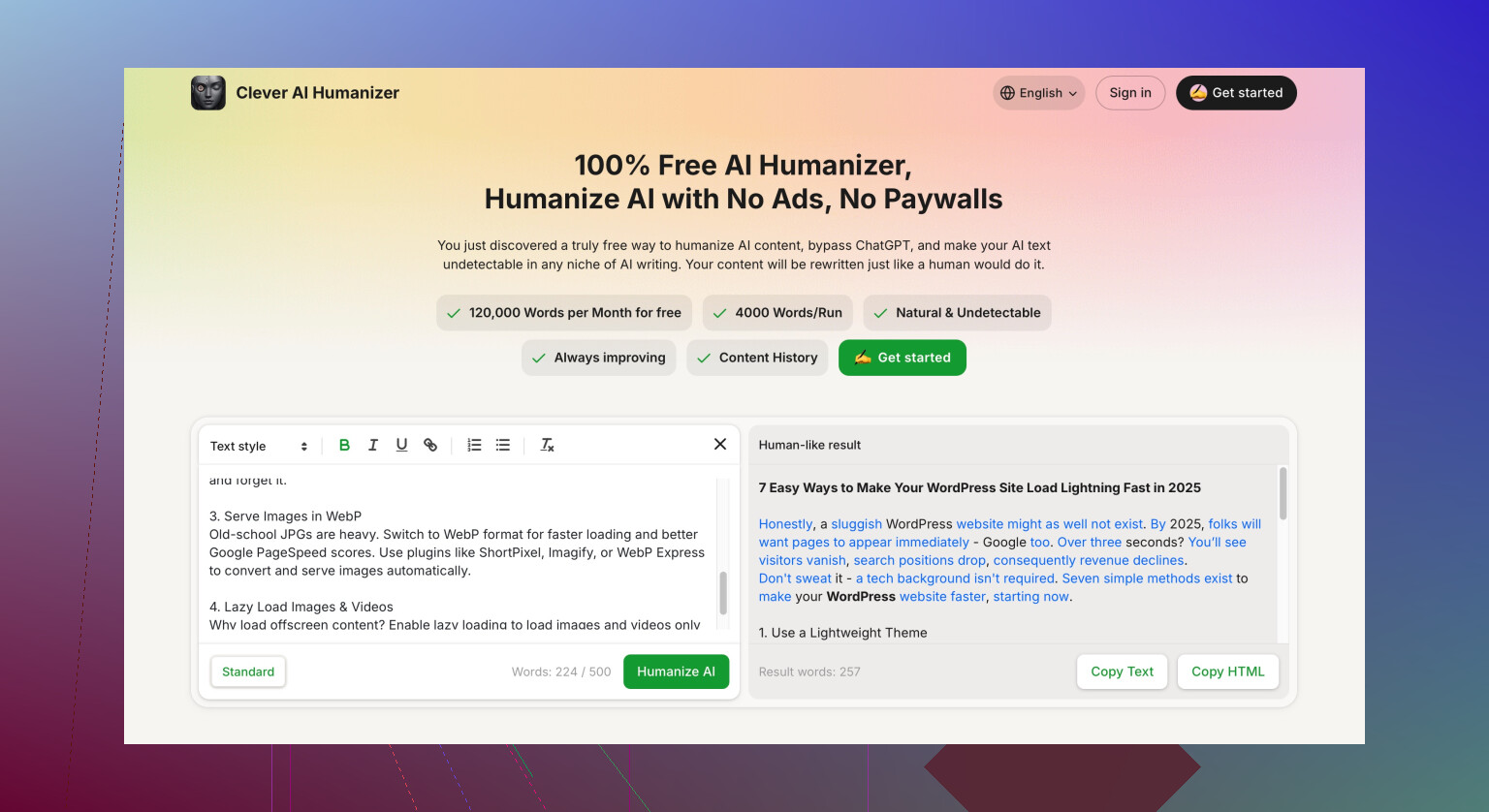
If you want to be lazy or just don’t have time to humanize it yourself, check out something like Clever Ai Humanizer. It’s specifically made to take robotic essays and pump a little soul into them—basically, it rewrites your text so it passes for legit human writing. Really helps if you’re stressing a deadline or want your stuff to pass AI detection. Give it a shot over at make your essay sound less like a robot. Sometimes, tech knows best how to undo its own awkwardness.
Honestly, I get what @viajantedoceu is saying but I have to push back on the idea of just “messing it up” on purpose. You can totally overdo that and end up with something that feels forced—like, if your essay suddenly sprinkles in random questions and fake stories, teachers will notice. Believe me, been there.
My approach is a bit more method-based: focus on YOUR voice, not just generic human-ness. Try dropping an opinion or two, even if it’s mild. Use phrases you’d actually say in a convo, like “to be honest” or “let’s face it.” Once you’ve got your draft, print it out or put it on your phone, walk away for an hour, then come back and read it as if it’s a text from a friend. Anything that sounds off, swap it with the way you’d actually explain things to someone your age.
For pure efficiency though, if you’re pressed for time and can’t do the manual polish (no shame in that), AI tools like Clever Ai Humanizer can help. They tweak the text to sound more like a person wrote it, sort of “de-AI”-ing the obvious patterns that get you flagged by graders or detectors.
But don’t just take my word for it—if you want more options, check out this list of top free humanizer tools for essays. There’s a bunch out there and some of them work surprisingly well. Just promise me you’ll read the final version yourself, because nothing ruins a grade like an AI typo calling someone the “prime mayonnaise” instead of “prime minister” (yep, seen it…).
22 Likes
Here’s the thing: making AI essays sound human isn’t just about breaking up sentences and adding the occasional “I think.” That can turn it into a weird Frankenstein’s monster of academic voice meets casual blog. Instead, try this analytical breakdown:
-
Tone-Check, Not Tone-Change: Skimming AI text for stiff phrases is good, but ask WHY a section feels robotic. Is it jargon overload or sterile, detached analysis? Pinpoint the culprit.
-
Perspective Injection: AI avoids risk and tends to default to bland objectivity. Drop in a tentative opinion, a counter-argument, or a “some argue…” moment. Even a simple “while it’s unclear if…” adds critical thinking vibes.
-
Contextual Examples Over “Real-Life” Filler: I’m wary of inventing personal stories just to sound “natural.” Instead, use a topical example or reference—something in the news, or a book/movie (yes, even a meme). Feels fresh AND real.
-
Authentic Mistakes? Maybe Not: There’s advice to add “mistakes” for the human touch, but forced errors look fake. Instead, allow for complexity or slight uncertainty (“This might be overly optimistic, but…”), which reads more like a thoughtful student than a clumsy bot.
As for tools, sure, Clever Ai Humanizer is a legit shortcut, especially when you’re under deadline. The pros: it’s fast, reduces that “AI aftertaste,” and works decently well at tripping up detectors. Bonus: less chance of slipping into awkwardly formal language. The cons: sometimes it swings too casual, which can clash if your prof loves rigid formality, and once in a while it misses context, making weird word swaps.
For competitors, @viaggiatoresolare is all about “finding your voice,” while @viajantedoceu suggests “messing it up.” Both decent, but can be heavy on manual labor or risk oddities if you’re not careful.
Ultimately, whether you use Clever Ai Humanizer, another tool, or go manual, don’t skip a final read-through. Human eyes catch what algorithms miss, and that’s what truly sets your work apart.