I need to connect two programs on my Windows PC that both require COM ports, but I don’t have physical serial ports available. Most solutions I found are paid, and I’m hoping to find a trustworthy free option. Has anyone had success with free virtual COM port software? What would you recommend or avoid?
Serial Port Software Hunt: My Not-So-Epic Quest
Anybody here actually stumbled on a no-strings-attached, free virtual COM port tool that just works? Because honestly, I’ve tried scrolling through endless “free download” organizers, and let me tell you—most of them either choke your system with popups or suddenly forget the “free” after a week or two.
So, here’s the closest thing I found: there’s this app from virtual-serial-port.org—yeah, that one. It’s smooth, doesn’t fry my CPU, but heads-up: you get a two-week demo before the paywall drops. After those 14 days, you’ll either need your wallet or need to restart the search.
If you’ve got some hidden freeware gem up your sleeve, I’m all ears. Until then, looks like it’s either trial roulette or cough up some cash.
20 Likes
Honestly, looking for actual free virtual COM port software on Windows feels like playing Where’s Waldo—except Waldo hits you with a paywall or malware half the time. I see @mikeappsreviewer mentioned the classic two-week demo trap. I’ve run into that with the same site, which is genuinely reliable but, yeah, not free past the trial. And don’t get me started on dodgy “free download” pages that only install mysteryware instead of a serial port emulator.
Slightly disagree here, though—I don’t actually think there’s much in the way of totally free virtual serial port drivers that work out-of-the box and don’t come with, you know, “complications.” Most open-source alternatives are abandoned or clunky (com0com, anyone?). That said, if you’re feeling brave, com0com is open-source, but its last official Windows installer was back before Windows 10 was even a thing. You’ll need to disable driver signature enforcement—so, yeah, it’s free, but with a nice side of system risk and hassle.
If you want something that won’t eat your afternoon troubleshooting, yeah, the demo from this trusted virtual serial port solution is the way to go. If your use-case is super short-term (student project, quick troubleshooting), the 14-day trial is genuinely pretty painless. Not free forever, but you’re not fighting off adware or rhyming with scam.
Tried the “create your own” route too—loopback adapter configs, coding some hacky pyserial bridges… fun for about five minutes, then you’re deep in Stack Overflow threads from 2011 with zero answers and broken links.
Long story short: total freeware? Scarce at best, outdated at worst. For stable, easy to use virtual COM ports, bite the bullet with the trial or go for something with a price tag if you need reliability. If anyone actually finds a legit, modern, forever free tool, drop it here—my patience for serial port drama is officially maxed out.
Yeah, chasing a free virtual COM port tool that isn’t stuck in the XP era or hiding malware is, honestly, a wild ride. I’m with @mikeappsreviewer and @waldgeist on most points—there just aren’t any squeaky-clean, modern, and truly free tools that don’t come with “baggage.” But I’ll throw a slightly different take in the mix: If you’re only looking for dead-simple, temporary COM port links (not production-level stability), you might get away with older, open-source options.
A couple more thoughts:
- com0com still makes the rounds, and as janky as it can be on Win10/11 (driver signature mess + some minor headaches), it’s technically free. You just need to be cool with the risk—not really recommended for folks who faint at the sight of a Microsoft warning dialog.
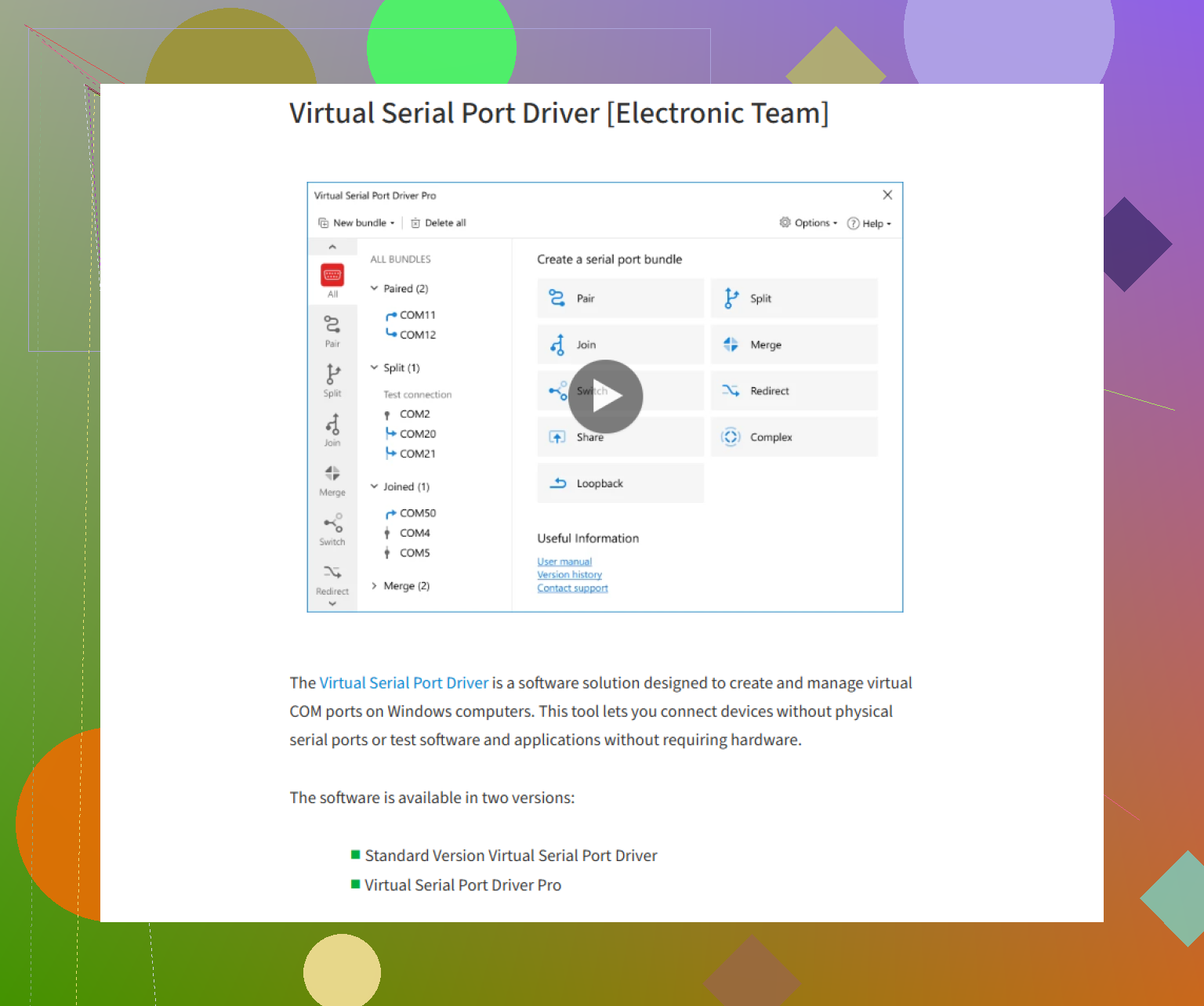
- If you’re not married to ‘zero cost forever,’ it’s hard to look past Virtual Serial Port Driver, especially if you want something you don’t have to babysit. There’s a reason it keeps popping up. The trial period is straightforward, and when it runs out, at least you know what you’re missing before dropping cash. If that sounds like your speed, check out exploring hassle-free virtual COM ports for a reliable download.
Wildly disagree on one point though: sometimes the “create your own” loopback hack actually works if both your programs are chill about it, but 100% admit it’s duct-tape at best.
TL;DR: If you want painless, try the paid stuff (demo first). Free options like com0com are a gamble now, but maybe worth a shot if you’re feeling adventurous/masochistic. And if anyone magically finds a modern, free, click-and-go solution, this thread’ll probably be the next episode of Unsolved Mysteries.
Here’s what everyone is missing: networking COM port traffic can be a legit alternative if you’re just after inter-program comms on one machine. Yeah, software like com0com (as mentioned) is free, but it’s basically a game of Russian Roulette when it comes to Windows 10/11 installs and unsigned driver fixes. Sure, if you want to spend Saturday googling “how do I install ancient sys files in test mode” and writing up your own certificates, knock yourself out.
Virtual Serial Port Driver, on the other hand, is clean, consistent, and people go back to it because—let’s be honest—spending hours troubleshooting is worth more than the license for most. The pros? It’s dead-simple, professional, and rarely spits out errors. Cons: the ‘free’ part is short-lived—once the trial’s done, you’re on your own unless you pay, and it’s overkill for simple one-offs.
If you’re more on the scripting/dev side: look at solutions like socat (Windows builds exist; not pretty, but work in a pinch), or pyserial’s virtual port modules if you can wrangle Python. But those definitely aren’t plug-and-play, and they don’t do Windows GUI comfort at all.
Quick take:
- Want reliability, GUI, and minimal fuss? Virtual Serial Port Driver, despite the price tag.
- Content to wrestle with drivers for a day or two and don’t mind jank? Try com0com, but cross your fingers.
- Need ‘real’ free and don’t mind wading through techy setups? Explore open source dev tools, but expect more DIY than you might want.
Ultimately, nothing’s really changed in this software space: you pay either with money, or with time and nerves.