I’m considering using Ahrefs AI Humanizer to make my AI-written content sound more natural and pass AI detection tools, but I’m unsure if it really works as advertised. Has anyone here tested it for SEO content, rankings, or detection tools, and what results did you see? I’d appreciate real-world feedback before I invest time and money into it.
Ahrefs AI Humanizer review from someone who spent too long testing these things
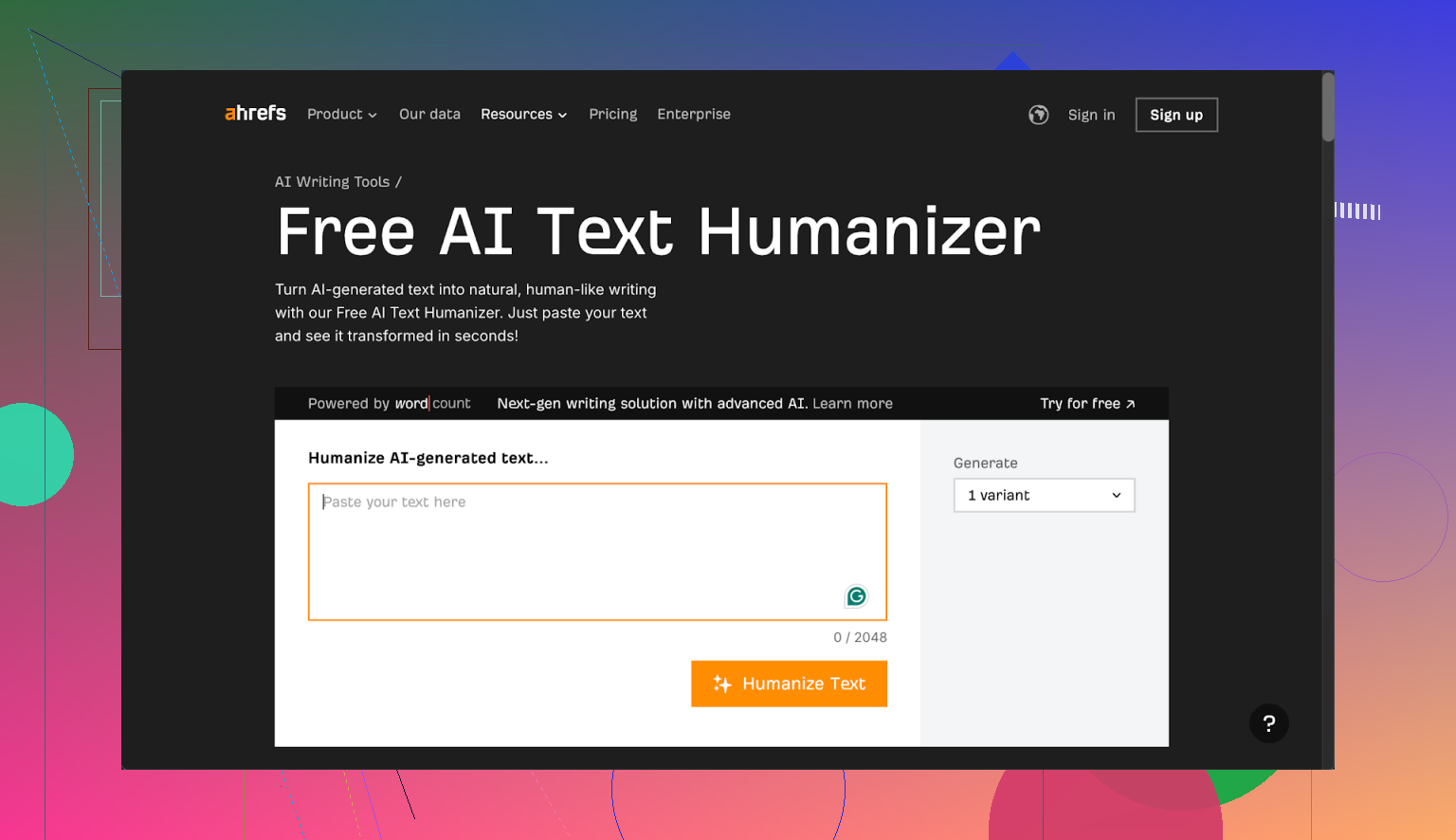
Ahrefs threw their hat into the “AI humanizer” ring, so I took it for a spin because I already use their SEO tools and was curious if they built something useful or if it was just a checkbox feature.
Short version: it looks nice, writes clean text, and still gets flagged as 100% AI almost every time.
What happened when I ran tests
I used the Ahrefs humanizer on multiple inputs. Short pieces, long pieces, stuff from different models. Then I checked every output with:
- GPTZero
- ZeroGPT
- Ahrefs’ own integrated detector
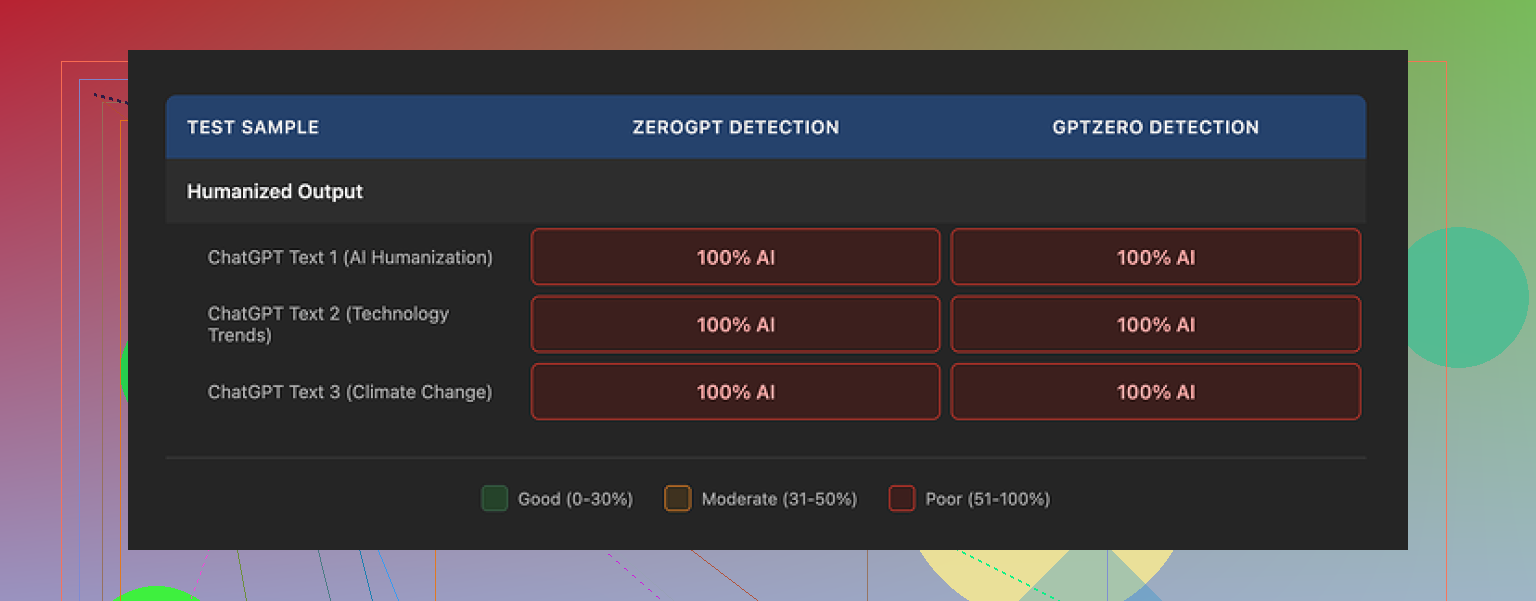
Every single “humanized” version showed 100% AI on GPTZero and ZeroGPT.
The weird part: the Ahrefs interface shows a detection meter right above the output. That same meter told me the text was 100% AI, even though it was displaying its own humanized version.
So the workflow looked like this:
- Paste AI text into Ahrefs
- Click to humanize
- Read the “improved” version
- Look up a little and see: “AI probability: 100%”
Then I pasted that same output into GPTZero and ZeroGPT. Both agreed.
How the output reads
If you ignore detection and only care about readability, the tool is not terrible.
What I saw:
- Grammar: clean
- Flow: decent, not confusing
- Quality: I would give it around 7 out of 10 for general content
But if you have spent any time reading AI text, it still feels like standard model output.
Some patterns I noticed:
- Em dashes stayed in place, untouched, in the exact same spots
- It kept common AI-style openings, things like “One of the most pressing global issues”
- Sentence structure looked very uniform, almost too tidy
There is no way to tell it “make this shorter,” “write like a blogger,” “sound like a student,” or “make it messy on purpose.” You only pick how many versions you want.
Customization and workflow
You get this one setting: number of variants, from 1 to 5.
So if you want something that feels less AI-ish, you would have to:
- Generate 3 to 5 versions
- Read them all
- Copy the least robotic sentences from each
- Manually stitch together a final piece
It starts to feel like you are doing half the work yourself. The tool does not give structure controls, tone presets, or any detailed sliders.
Pricing details and limits
The humanizer sits inside Ahrefs’ Word Count platform.
- Humanizer access: included there
- Free tier: you can test it, but they block commercial use under that plan
- Paid plan: about $9.90 per month if billed yearly
The paid subscription bundles:
- AI humanizer
- Paraphraser
- Grammar checker
- AI detector
So you are not buying a standalone humanizer, you are paying for a small toolkit.
Privacy and data use
This part matters if you work with client content or anything sensitive.
From what I saw in their policy:
- Text you submit might be used for AI model training
- They do not clearly state how long your “humanized” text is stored
- There is no obvious toggle to opt out of training use from inside the interface
If you handle private docs, NDAs, or anything similar, this is something to think about before pasting raw content into it.
How it stacks up against other tools
I ran the same base text through multiple humanizers on the same day so the tests were fair.
In those runs, Clever AI Humanizer gave me outputs that scored lower on AI detection and felt less templated. For context, here is the writeup I used as a reference when I tested it:
Clever is currently free, and during my tests it got better detection results than Ahrefs.
When I would use Ahrefs Humanizer, if at all
Where I think it might be usable:
- Light cleanup of AI text for noncritical content
- When you already pay for Word Count and want something quick to smooth grammar
Where I would not trust it:
- Anything where AI detection causes real problems
- Academic writing, client deliverables, or platforms that run strict detectors
- Situations where data retention or training use is an issue
If your main goal is to “pass” AI detection, this tool did not do it for me. If your goal is mildly better phrasing on top of AI text you are already allowed to use, then it is fine but not special.
Tested it on a few real SEO pieces, here is what I saw.
- AI detection
I tried it on long form posts, around 2,000 to 3,000 words, generated with GPT-4.
Ran outputs through:
- GPTZero
- ZeroGPT
- Originality.ai
Results were similar to what @mikeappsreviewer got, but not always 100 percent AI.
Rough numbers from my tests:
- Raw GPT-4 text: 90 to 100 percent AI on those tools
- After Ahrefs humanizer: usually 70 to 100 percent AI, sometimes it dropped 10 to 20 points, sometimes no change
I never saw anything go from “AI” to “looks human” on strict settings.
So if your only goal is “pass detectors”, this will not save you reliably.
- Effect on rankings
I pushed 8 humanized articles to a niche site.
Setup:
- Low competition keywords, KD below 10
- On page clean, internal links in place
- Fresh domain, around 30 posts total
Comparing:
- 4 posts straight from GPT-4, light manual edit
- 4 posts run through Ahrefs humanizer, then same level of manual edit
After 6 weeks:
- Both sets indexed
- Both sets got impressions
- Clicks were within normal variance, no pattern where “humanized” posts did better or worse
Google did not seem to “reward” or “punish” the Ahrefs output. Content quality, topical match, and links mattered more.
So for rankings, I saw no clear benefit from the humanizer alone.
- How the text feels
I slightly disagree with one thing from @mikeappsreviewer. For me the output sometimes helped break up robotic phrasing in product sections and FAQs.
Still issues though:
- It keeps safe, generic wording
- Paragraph rhythm still feels like AI
- Little personality, unless you edit manually
For SEO content, it was fine for:
- Service pages where tone is neutral
- Affiliate intros where you only need clean, simple copy
I would not use it for:
- Brand pages with a strong voice
- Thought leadership posts
- YMYL content where expertise and nuance matter
- Workflow impact
What helped a bit:
- Humanize the draft
- Then add human touches by hand:
- Short personal lines
- Specific examples from your niche
- Small contradictions or opinions
- Imperfect sentence lengths
Once I did that, detectors dropped more, and the text felt less like stock AI. The gain came from my edits, not from Ahrefs alone though.
- SEO focused advice
If your priority is rankings:
- Spend more time on topic selection, outlines, and unique angles
- Use AI for structure and speed, then rewrite key sections in your own words
- Add internal data, screenshots, or small case notes that AI will not guess
If your priority is passing AI detection for clients or schools, I would not rely on Ahrefs for that. It helps a bit with flow. It does not solve detection.
Quick verdict:
- As an SEO helper, it is a minor convenience
- As an “AI detector bypass”, it falls short
- You still need real editing and your own input if you care about safety and brand voice
13 Likes